Great Placement Solutions for Your Students
Welcome to ‘Virtual Student Placements’ by Health Academy. Health Academy supports a range of Universities in the UK by delivering practice placements for Undergraduate and Postgraduate healthcare students. We are able to deliver placements for students of nursing, physiotherapy, occupational therapy, dietetics, pharmacy and other allied health professions.
A virtual practice placement is a learning experience for undergraduate or postgraduate healthcare students that takes place online instead of in a physical healthcare setting. It allows students to gain practical skills and knowledge through simulated scenarios, virtual patient interactions, and online workshops.
Students can engage in activities such as virtual consultations, case studies, development of digital tools and discussions with peers and clinical professionals. This virtual format provides a safe and controlled environment for students to practice and develop their clinical skills, critical thinking abilities, and professional competencies. It also offers flexibility in terms of time and location, making it accessible to a wider range of students.
At the outset of any placement development, Health Academy maps learning outcomes, proficiencies and learning domains to the professional documentation such as PAD & CPAF to ensure that the virtual student placement meets the relevant professional standards.
In addition we work with the University or local Training Hub to ensure that the placement is delivered in line with the relevant professional body and commissioning body requirements. The regulators and commissioning bodies have aknowledged both the need for innovative and alternative placement offerings as well as the benefits for students.
Download a copy of our Student Placement Brochure to read through at your leisure, or send on to your interested stakeholders
We have a range of well established placement models, some examples of which are summarised below.
We also have the option to create bespoke models based on the needs of the University.
Centered on the NHS Healthcheck Programme, it provides practical experience in vital areas, including research, development of digital tools, use of an EMR system, and comprehensive patient assessment and referral.
This placement is mapped to the relevant learning outcomes and proficiencies in the PAD document
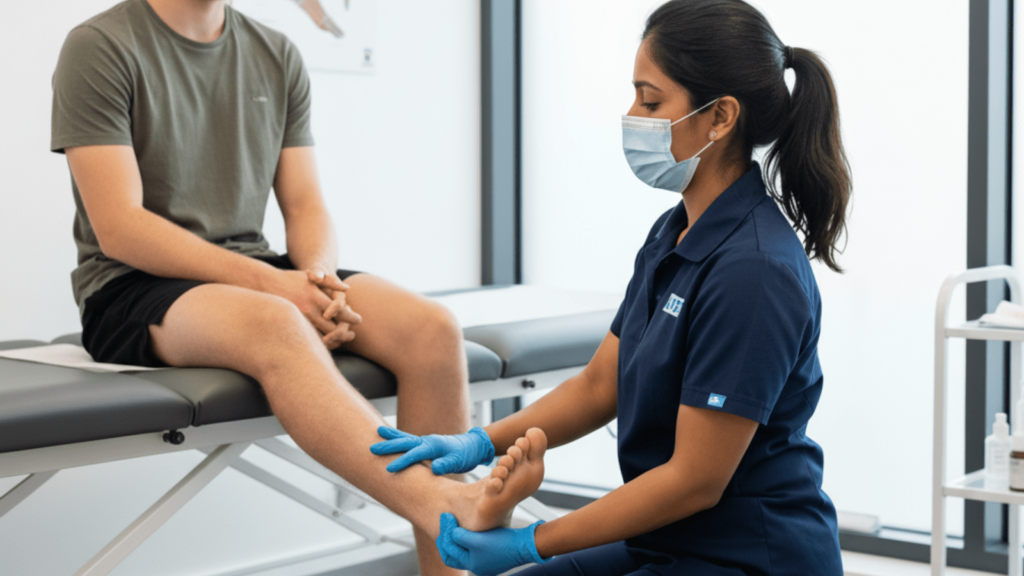
This musculoskeletal placement focuses on the initial assessment and ongoing management of common injuries to the knee, ankle, shoulder, and spine. It is designed to refine key consultation skills, including both objective and subjective assessment. The experience is fully mapped to the learning outcomes of the CPAF document, ensuring students develop core professional proficiencies.
This is a multi-professional placement for all allied health professionals and nurses. It explores the full journey of an adolescent’s neurological episode, from acute care through rehabilitation to returning home. The placement also highlights effective communication with patients, family, and friends, and focuses on returning to daily activities. This placement is aligned to relevant frameworks.
The Front Door of the NHS placement is designed for first-year and international students to introduce them to the NHS ecosystem. It explores various patient access points, from NHS 111 and GP practices to school nursing. You’ll gain practical experience in patient assessment, EMR system management, research, and using digital tools, including AI patient simulations. There is also an option with this placement for a Mental Health version. Mapped to profession specific frameworks.
This Mental Health Nursing placement, for either first or second-year students, explores the diverse roles of the mental health nurse across various services, from primary care to forensic settings. Students will gain practical experience in mental health assessment, EMRS management, digital resource development, video consultations, and AI patient simulations. Mapped to relevant PAD.
This Children’s Nursing placement, based on the Healthy Child Programme (0-19 years), explores universal services like Health Visiting and School Nursing, alongside specialist services such as CAMHS and Safeguarding organisations. Students will gain practical experience in assessment, EMRS use, digital tool development, and video consultations, all with a key focus on safeguarding.
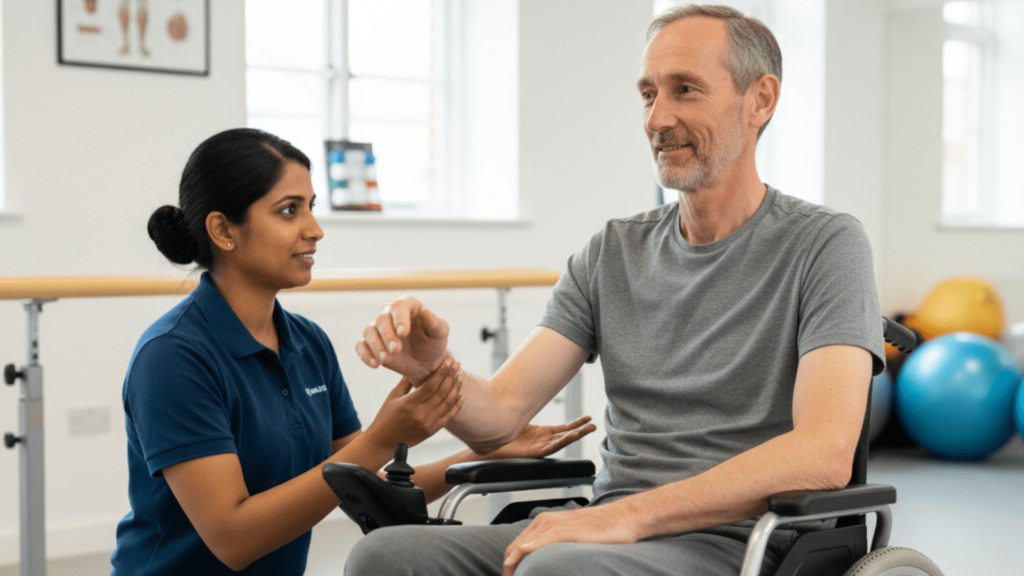
This physiotherapy neuro placement, mapped to the CPAF learning outcomes, introduces students to the assessment and management of various neurological conditions, including stroke, MS, and Parkinson’s. Students will gain practical experience in patient assessment, referral, and EMRS use. Additionally, they will develop digital tools and use AI patient simulation to enhance their learning.
This Professionalism Placement was developed to address the significant challenges many institutions have faced related to student professionalism, particularly in the wake of external factors like COVID. It focuses on essential skills such as positive communication, time management, and professional use of technology. This placement can be adapted to be either profession-specific or a multi-professional learning experience.
This Learning Disability placement offers a unique opportunity for Adult, Child, and Mental Health nursing students to experience a vital, often-overlooked field. It explores effective strategies for working with patients with learning disabilities, a skillset essential to every branch of nursing. This placement is fully mapped to the PAD document, ensuring valuable professional development.
Great Learning Opportunity
“Virtual learning offers flexibility making education accessible to a broader audience. Students from different regions can participate in courses which bring new ideas and experiences to a learning experience. The online platform incorporated adaptive learning technologies, which enabled me to focus on areas where I needed more help. The course was highly interactive, including real-time discussions, video lectures, and group projects; this fostered a collaborative and engaging learning experience.”
Really Interactive
“Virtual learning empowers students like me to take more ownership of their learning journey. I have improved valuable skills like time management, self-discipline, and self-motivation, which are essential for lifelong professional success.”
Empowering
“I actually really enjoyed this placement and I could only really say positive things about it. Plus Tanya was absolutely lovely, so thumbs up from me!”
Great Support
“Although I was a bit weary at first at the thought of an online placement, I have learnt new things and a different way of learning”
New Ways to Learn
No, there are no costs for the HEI. A Health Academy Virtual Placement is treated as any other placement would be. The HEI report the clinical placement hours to NHS England as would be done for any other placement and Health Academy are reimbursed via the Clinical Placement Tariff. In some cases we may look to work with the HEI by utilising facilities at the HEI, but any plan for this will be agreed during the planning phase.
Each regulatory body has different guidance on this. For example the current NMC guidance limits this to 8 weeks over the course of undergraduate course. The NMC is currently undertaking a consultation and it is widely expected that alternative placement provisions will be extended. HCPC approach is more flexible on the use dependent on need.
We work closely with the HEI at the outset to ensure that the placement structure is able to link directly to the learning outcomes and domains that the healthcare student is required to meet.
Yes, Health Academy strongly believes in the delivery of high quality learning, support and supervision throughout our placements. We embed the principles in the NMC guidance throughout our placements and are fully compliant with all standards. All team members are supervisor and/or assessor trained.
Although the placements are virtual, we have mechanisms to monitor students progress with the project, including regular group and individual meetings with the named clinical practice assessor. We also have a digital student diary for every placement which each student is required to complete daily to log their hours and briefly summarise their placement activity that day.
The longer lead in time we have, the better prepared we can be for a placement and it also allows us to really ensure that all stakeholders are fully briefed. Our preferred timeframe would be 3 months or longer. However, we have been asked at short notice to provide placements within a couple of weeks, which we have been able to faciliate using the tried and tested placement models that we already have built.
We have permanent team members that work on the ‘Virtual Student Placements’ throughout the year, therefore we are able to facilitate placements this academic year if required.
We are able to offer a wide range of solutions to meet your student placement needs. Why not arrange a call to see how we can help you?