
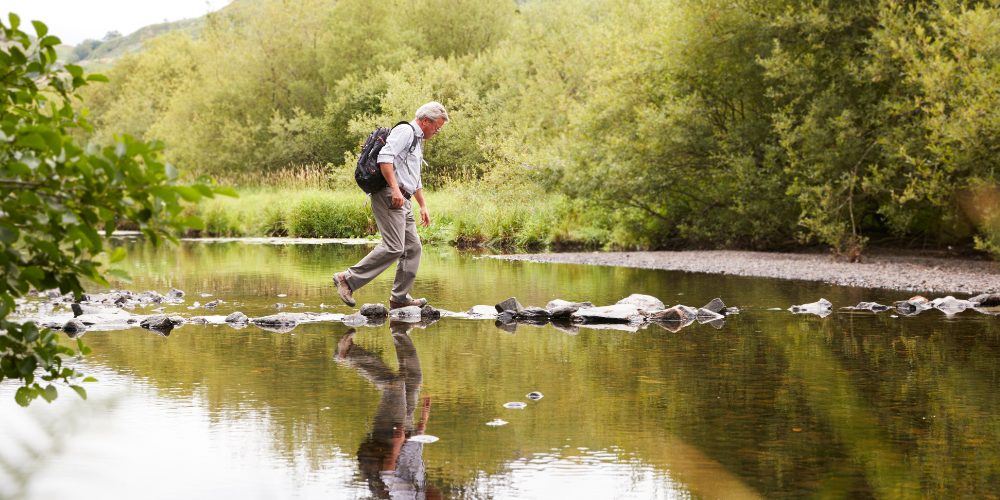
Most people don’t consider rivers in their day-to-day lives. They’re something you can pass on your walk, drive over on your daily commute, or notice after a deluge of rain. But what we may not realise is how much rivers are doing behind the scenes, shaping the landscapes we live in and influencing the environment around us.
At Health Academy, we’re excited to be partnering with Severn Rivers Trust. Severn Rivers Trust’s mission is simple: to make practical changes on the ground across the whole of the Severn to improve how rivers function. Whilst Health Academy and Severn Rivers Trust sit in very different spaces, we share a common interest in supporting healthier and happier communities.

Across the entire Severn, Severn Rivers Trust works with landowners and partners to restore rivers by slowing the flow of water, reconnecting rivers to their surrounding floodplains, and creating space for wildlife to thrive again.
This work includes creating wetlands to hold water higher up in the landscape, planting trees along the riverbanks to stabilise the soil and provide shade for fish, and installing natural features in the river to create better habitat and reduce erosion. It also involves tackling barriers that prevent fish from moving upstream to spawn, as well as working closely with farmers to find nature-friendly solutions to help reduce agricultural pollution entering the river in the first place.
There isn’t one single solution. It’s about combining small, effective changes that can work long-term with the environment’s natural processes. When these efforts are delivered at scale across the whole catchment, they can start to make a real difference to the health of our rivers.

Many of the challenges our local rivers face today are a result of how they’ve been managed historically.
Channels have been straightened and deepened, wetlands have been drained, and rivers have been removed from their surrounding floodplains. These changes were often made to help move water away from the land more quickly, making it easier to manage, but they have altered the way our natural river systems behave.
Now, water often moves faster through the landscape, resulting in fine sediments and nutrients washing more easily into rivers. Habitats have become more limited, and wildlife has fewer places to thrive.
Restoration work focuses on addressing this by working with the river, rather than trying to control it.

We’ve also seen a growing understanding of how closely our rivers connect the people around them. Spending time in and around water can support our physical and mental health. Good access to green and blue spaces has been linked to reduced stress, improved mood, and increased levels of physical activity.
There is also increasing recognition that natural environments, including rivers, can play a role in supporting overall wellbeing and encouraging healthier lifestyles as part of a more holistic approach. For some individuals, this may be as simple as spending more time outdoors, walking near water, or engaging with local nature-based activities.
There is also growing interest in approaches such as social prescribing, where healthcare professionals may signpost patients to non-clinical support within their community, including access to green and blue spaces.
For those of us working in healthcare, this connection is becoming increasingly important when thinking about the wider determinants of health and how we support patient wellbeing beyond clinical settings.
As part of this partnership, our team will be joining Severn Rivers Trust on site later this year for a volunteering day, getting involved in practical river restoration work and seeing first-hand how this work is delivered on the ground.
This partnership reflects a shared commitment to supporting both environmental and community health. By working alongside Severn Rivers Trust, we hope to help raise awareness of the important connection between nature and wellbeing, while supporting work that delivers long-term benefits for both people and the environment.
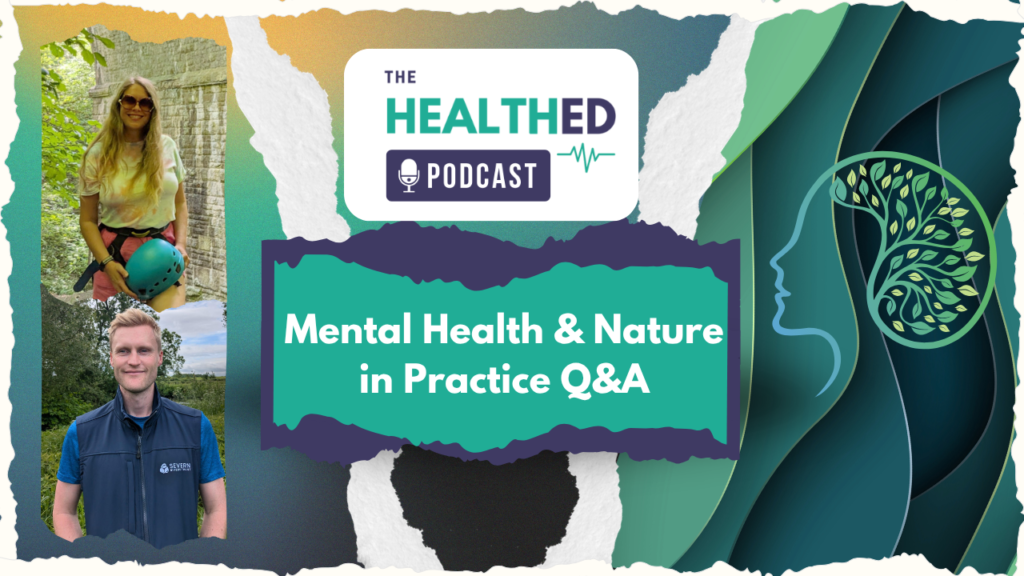
If you’re interested in exploring this topic further, we’re hosting an upcoming Lunchtime Health News session on Monday 18th May 2026 between 12:30–1:15pm, focusing on the connection between mental health and the natural environment.
This informal session will look at how green and blue spaces can support wellbeing, with insights from both a clinical and environmental perspective. It’s designed for primary care professionals looking to better understand the wider factors that can influence patient health.
The session will be hosted by one of our Health Academy trainers Alys Bunce and features guest speakers Claire Baker, Registered Mental Health Nurse, and George Clark, Programme Manager at Severn Rivers Trust. Together, they will share practical insight into how nature-based approaches can support wellbeing, along with real-world perspectives from both healthcare and environmental practice. Sign up below to reserve your spot!
📅 Mental Health & Nature in Practice: Headspace Meets Green Space
🕒 Monday 18th May @ 12:30pm – 1.15pm online
This blog has been written in partnership with Severn Rivers Trust.