

By Valerie Dowley
Independent Tissue Viability Nurse Specialist
The prompt recognition of wound infection and implementation of appropriate interventions remains one of the most important aspects of wound management. Increasing patient complexity, advancing age, and the growing prevalence of multiple comorbidities mean that delayed identification of infection can have serious consequences for both wound healing and overall patient wellbeing.
Woo et al. (2024) highlighted how there are too many variations in how clinicians interpret the signs and symptoms of wound infection and how these findings are subsequently incorporated into clinical decision-making processes. Similar concerns have been reported by Jones (2018), who identified inconsistency in assessment and management practices.
As the majority of wound care in the UK is delivered by registered nurses, nursing associates and healthcare support workers, practitioners have a professional duty to ensure that their knowledge and competencies remain current and aligned with evidence-based practice (NMC, 2018).
In this article, we explore how wound infection develops, the signs clinicians should look out for and when and how an effective wound swab should be taken.
The National Wound Care Core Capability Framework for England provides a benchmark for all professionals involved in wound care, whether they are delivering frontline wound management, acting as gatekeepers to specialist services, or providing expert support.
The framework supports the development and demonstration of knowledge and clinical skills while promoting high standards of wound care practice and professional development (Skills for Health, 2021).
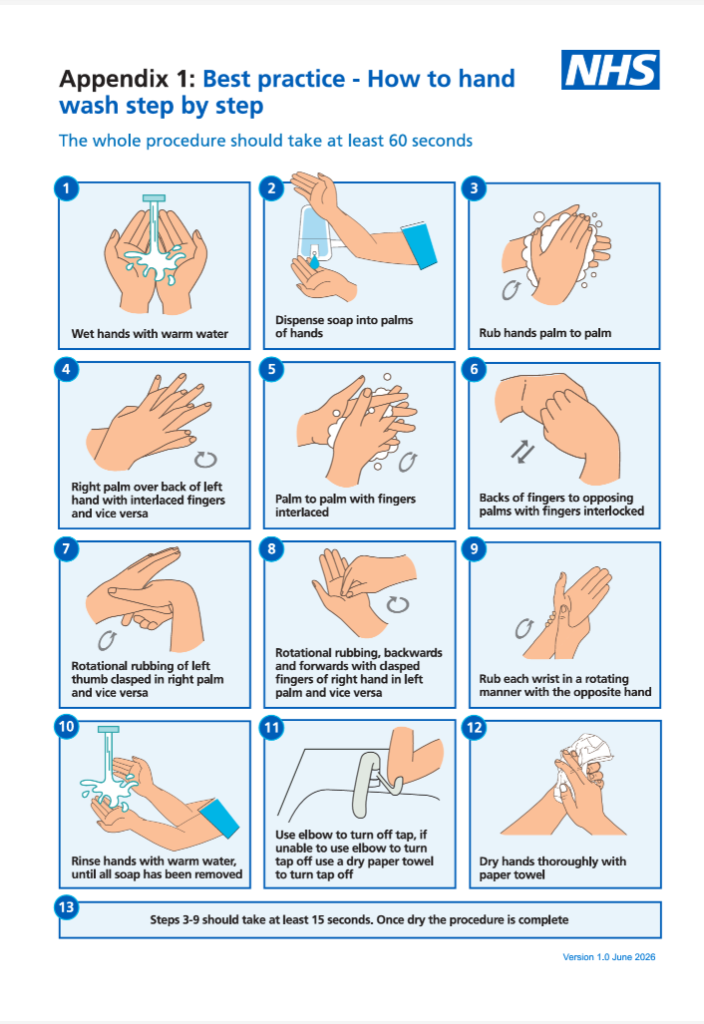
Hand hygiene remains one of the most effective measures for reducing cross-infection and preventing contamination between patients and healthcare professionals (NHS, 2023; Infection Prevention and Control, 2023).
Effective hand hygiene and adherence to local aseptic technique should underpin all aspects of wound management.
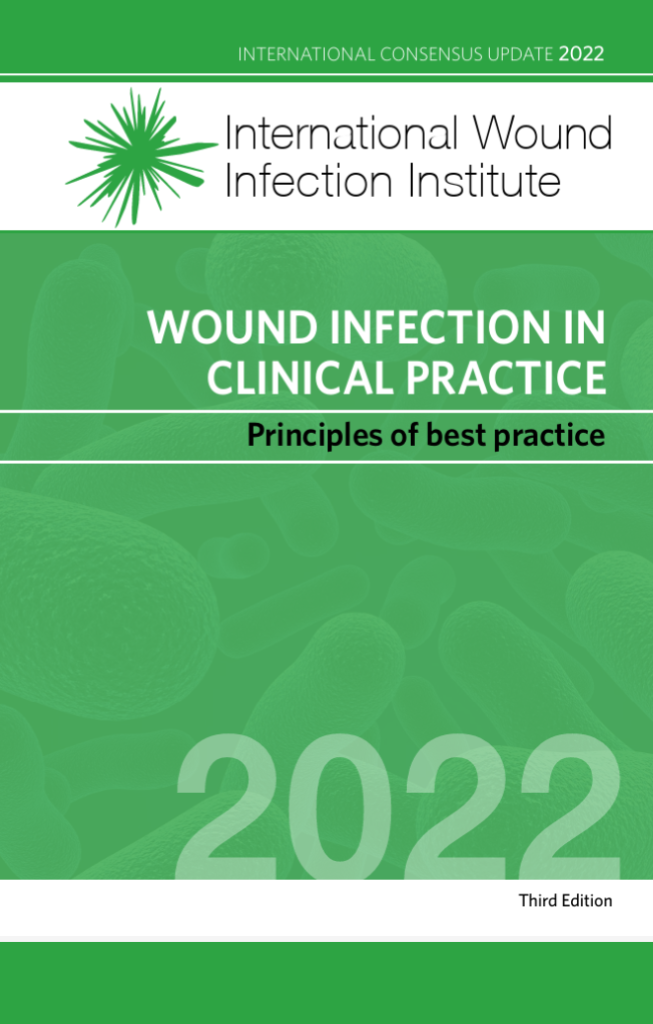
The International Wound Infection Institute (IWII) (2022) defines wound infection as the invasion and proliferation of microorganisms within a wound to a level that triggers a local, spreading and/or systemic host response. Swanson et al. (2015) described this more simply as impaired wound healing caused by bacteria.
Not every wound becomes infected. The likelihood of infection depends on several factors, including:
All wounds contain microorganisms and the initial contamination commonly arises from the patient’s own skin flora (McCoulough, 2020).
Contamination describes the presence of microorganisms without multiplication or impact on healing.
Colonisation occurs when microorganisms multiply but still do not provoke a host response or delay healing.
Local infection develops when bacterial proliferation exceeds the host’s ability to control microbial activity. Clinical indicators may include erythema or tissue discolouration, increasing exudate, wound malodour, rising pain levels, friable granulation tissue and delayed epithelialisation. Certain patient groups, including those who are immunosuppressed or have diabetes, may display less obvious signs.
Spreading infection involves extension into surrounding tissues and may present with oedema, wound enlargement, increased necrotic or sloughy tissue, purulent exudate, spreading inflammation and cellulitis.
Systemic infection occurs when microorganisms or their toxins affect the wider body and may result in loss of appetite, malaise, lethargy, pyrexia and, in severe cases, sepsis (IWII, 2022; Rutter, 2018; Sandoz, 2022; Jones, 2018).
Useful Resource: For more detail on how wound infection can progress, see the International Wound Infection Institute’s Wound Infection Continuum (page 9), which illustrates the progression from contamination and colonisation through to local, spreading and systemic infection.
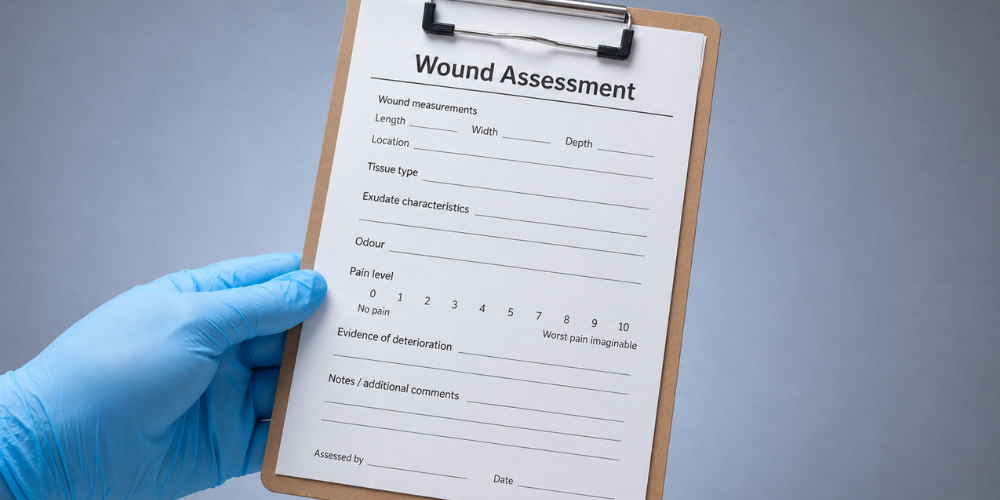
If any new or reoccurring infection is suspected, clinicians should undertake a new comprehensive wound reassessment.
This should include recording:
Routine clinical observations should be completed in line with NEWS2 guidance, and concerns escalated through local pathways, including senior clinicians and GPs where appropriate (NICE, 2016).
Appropriate wound products should be selected from local formularies to address symptoms such as excessive exudate (superabsorbent dressings) or increased microbial burden (antimicrobial dressings).
Specialist advice should be sought where required. This may include support from:
Early specialist input may be particularly important for patients with complex comorbidities, including diabetes, peripheral arterial disease, immunosuppression or malnutrition.
Clear documentation of assessment findings, clinical decisions, actions and rationale is essential.
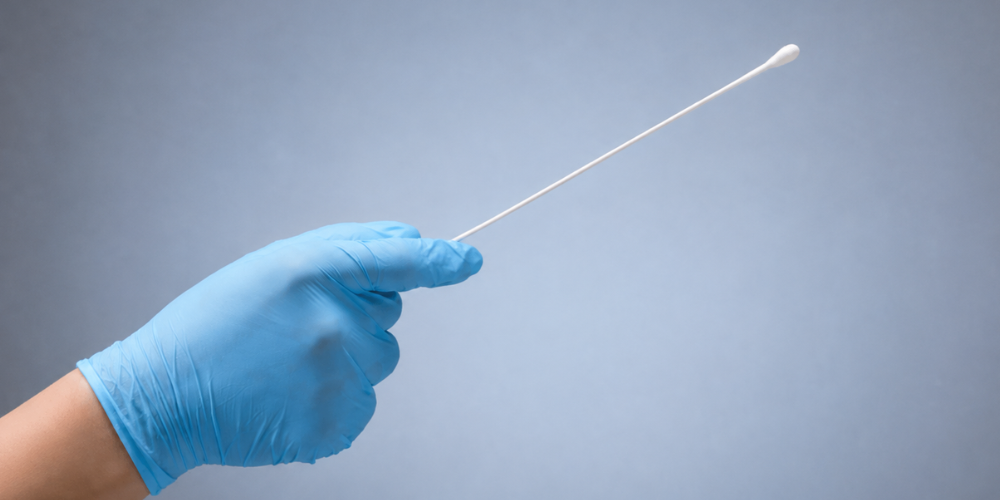
Although wound swabbing is a straightforward and non-invasive investigation, it should not be undertaken routinely. Wound swabs do not diagnose infection in isolation. Instead, they provide microbiological information relating to microorganisms present within the wound. Because all wounds contain microorganisms, swabbing should be reserved for wounds displaying clinical signs of infection or unexpected deterioration.
The clinician undertaking the swab is responsible for ensuring:
Follow-up should be undertaken in partnership with the relevant medical team and microbiology service where required (Patton, 2010).
Evidence from a randomised controlled trial by Angel et al. (2011) demonstrated that the Levine technique identified more organisms than the traditional Z-stroke method in both acute and chronic wounds.
The Levine method involves rotating the swab over a clean area of viable tissue while applying sufficient pressure to express wound fluid, thereby increasing microorganism recovery.
All wound swabbing procedures should be performed using Aseptic Non-Touch Technique. ANTT resources and guidance are freely available and can be used to support clinical practice and staff education.
Useful resource: For a practical overview of the process, take a look at Public Health Wales’ Step-by-step guide to taking a wound swab using the Levine technique. It covers wound preparation, choosing the correct sampling site, taking the swab and preparing it for microbiology.
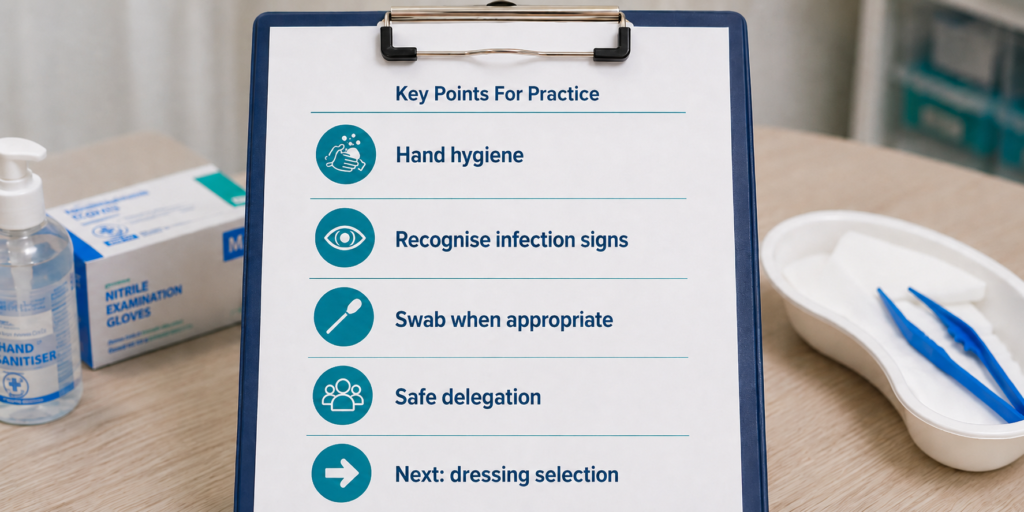
Hand hygiene remains one of the most effective measures for reducing cross infection and preventing contamination between patients and healthcare professionals (NHS, 2023; Infection Prevention and Control, 2023). Regular handwashing and adherence to local aseptic technique should underpin all aspects of wound management.
In summary, healthcare professionals involved in wound assessment and treatment must be able to recognise the signs of wound infection, know when microbiological sampling is appropriate and understand how to perform wound swabbing using evidence-based techniques. Where aspects of wound care are delegated, registered nurses retain accountability for ensuring delegated staff possess the necessary knowledge, skills and confidence to identify deterioration and escalate concerns appropriately.
The next article in this series will explore wound dressing selection and strategies to minimise unnecessary antibiotic use.
Join Valerie for a free Wound Care in Primary Care lunchtime session on 21 September, 12:30–1:30pm, exploring practical approaches to wound assessment, wound bed preparation and common wound care challenges in primary care.
Register for your free place here.
If you would like to build your confidence and knowledge in wound assessment and management, Health Academy offers two wound care courses, with options for both Healthcare Assistants (HCAs) and Practice Nurses.
Visit the individual course pages to find out more, or contact Health Academy to arrange bespoke wound care training for your team.

Our ‘Wound Care Management for HCAs’ course provides a comprehensive overview of essential skills and knowledge in wound care management. Covering skin anatomy, wound healing principles, and classifications of wounds, the course delves into practical aspects of wound management including, dressing selection, infection control, and other medico-legal considerations.
Contact us below to register your interest.

Our ‘Wound Care for Practice Nurses’ course provides a comprehensive overview of essential skills and knowledge in wound care management. Covering skin anatomy, wound healing principles, and classifications of wounds, the course delves into practical aspects of wound management including, dressing selection, infection control, and other medico-legal considerations.