
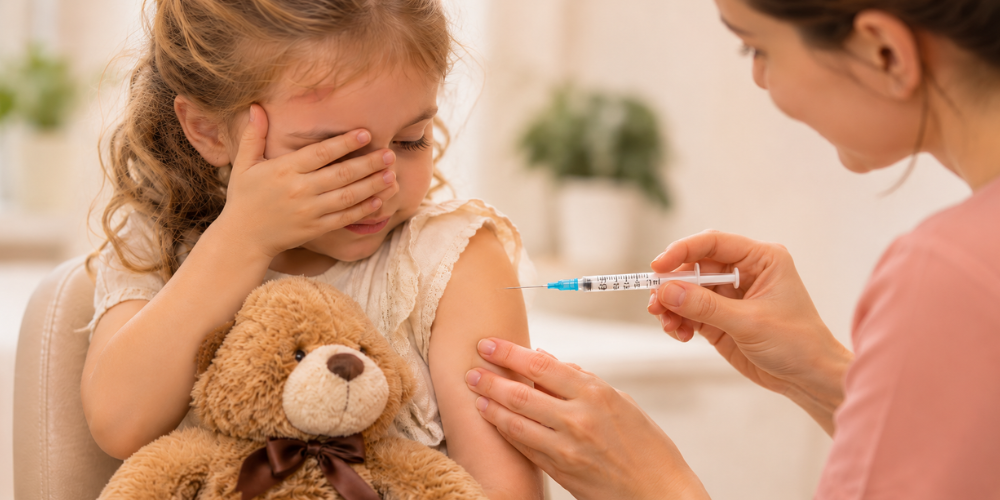
The next stage of the UK’s MMRV vaccination programme is now underway. Launched on 1 November 2026, the selective catch-up programme offers an opportunity to protect more children against chickenpox, an infection that many families have traditionally regarded as an inevitable part of childhood.
For practice nurses and immunisation teams, the new programme brings some interesting considerations. How will parents respond to an additional vaccination when their child has already completed their MMR schedule? And what might influence the decisions of families who have previously viewed chickenpox as a relatively harmless illness?
These questions connect to a wider challenge in childhood immunisation. Research continues to show strong parental confidence in vaccines, yet uptake remains below recommended targets and significant inequalities persist. Understanding the gap between confidence and uptake is particularly relevant as vaccination schedules continue to evolve.
As the catch-up programme gets underway, it’s an opportunity to explore what parents’ experiences and the latest vaccination figures tell us about improving uptake and building on the considerable work already taking place in primary care. But first, let’s take a closer look at what the new catch-up programme involves and who it is intended to protect.

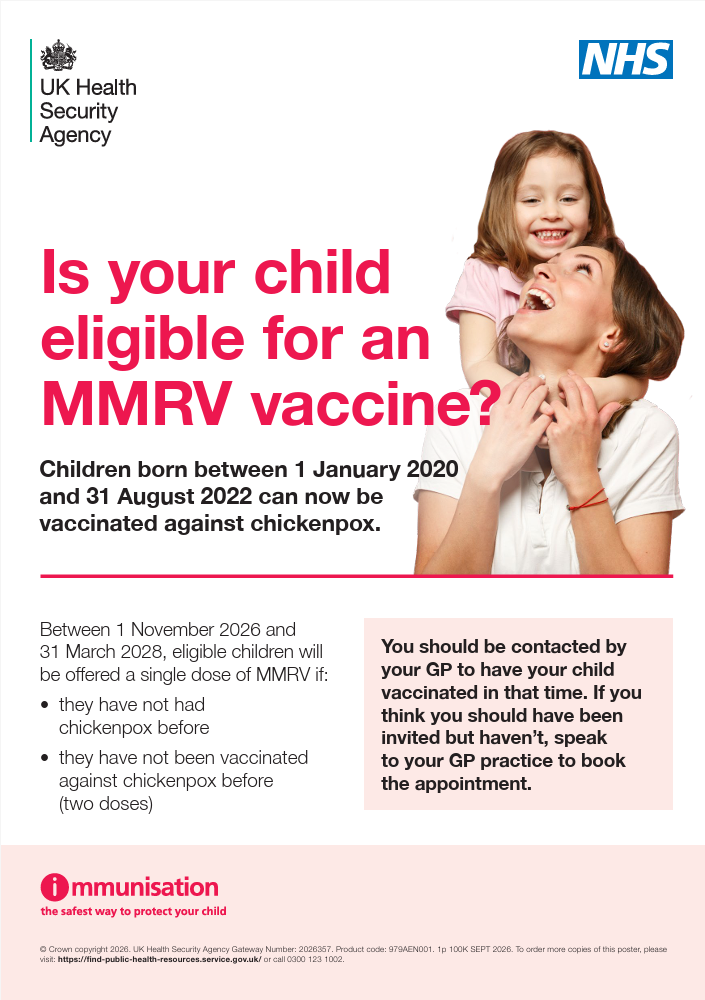
The selective catch-up programme runs from 1 November 2026 to 31 March 2028, offering one dose of MMRV to eligible children across the UK born between 1 January 2020 and 31 August 2022.
While chickenpox is usually mild and self-limiting, it is not always harmless. Some children develop complications, including secondary bacterial infections of skin lesions, which can occasionally lead to invasive Group A Streptococcal infection. Other complications include pneumonia and neurological conditions such as acute cerebellar ataxia and, more rarely, encephalitis.
Chickenpox can also be particularly serious for newborn babies, pregnant women who are not immune and people with weakened immune systems.
The importance of extending protection is highlighted by UKHSA’s first annual varicella surveillance report, published on 30 October 2026. It recorded 3,037 chickenpox-related hospitalisations among children and young people under 18 in England during 2025, providing a valuable baseline against which changes in infections and hospitalisations can be monitored as the vaccination programme becomes established.

For parents whose children have already completed their two-dose MMR schedule, an invitation for another MMR-containing vaccine may understandably come as a surprise. Why is another dose necessary when their child is already protected against measles, mumps and rubella?
The distinction is important: the catch-up vaccination is primarily intended to provide protection against chickenpox, rather than because previous MMR vaccinations were inadequate. However, the idea of a third MMR-containing dose may raise questions, particularly among families who were not expecting any further vaccinations at this age.
So, let’s explore some of the questions that may come up in conversations with parents and how the current guidance helps us address them.
UKHSA confirms that there are no additional safety concerns associated with children receiving a third MMR-containing dose. As MMR and MMRV are live attenuated vaccines, pre-existing antibodies can neutralise the vaccine viruses in subsequent doses, meaning the frequency of adverse reactions generally decreases with additional doses.
There is also reassurance in the vaccine’s established international use. MMRV may be new to the UK’s routine childhood immunisation schedule, but it is not a new vaccine, having been used in other countries for many years.
An important part of any vaccination discussion is explaining potential side effects and ensuring parents have the information they need to make an informed decision. Most reactions to MMRV are mild, including fever, a temporary rash or injection-site discomfort.
UKHSA advises that there is a small increased risk of febrile seizures following the first dose of MMRV compared with administering separate MMR and varicella vaccines. However, this increased risk has not been observed following a second dose of MMRV. The risk was carefully considered by JCVI, which concluded that the benefits of the combined vaccine outweighed the small increased risk.
Other questions may arise from a child’s previous experience of chickenpox. Parents might remember an illness they believed was chickenpox but feel uncertain about whether it was correctly identified.
Where previous chickenpox infection is reported and the child has completed their two-dose MMR schedule, the selective catch-up dose is not required. However, practices are not required to routinely check chickenpox history before inviting or vaccinating eligible children. If parents are uncertain whether their child has previously had chickenpox, MMRV can still be offered without additional testing. UKHSA also confirms that previous chickenpox infection is not a contraindication to vaccination, so there are no additional safety concerns if an otherwise eligible child receives MMRV despite having had the infection.
Some families may have arranged private chickenpox vaccination before its introduction into the routine programme. Children who have received one previous varicella-containing vaccine dose should still be offered catch-up MMRV if otherwise eligible, whereas those who have already received two doses do not require another dose for chickenpox protection.
For further information on previous chickenpox infection, vaccination history and eligibility for the catch-up programme, refer to the UKHSA MMRV vaccination: information for healthcare professionals.
There may also be questions about why the catch-up programme offers only one dose when younger children now receive two routine MMRV doses. Although two doses provide greater protection against chickenpox infection, a single dose still offers very good protection. According to UKHSA, one dose is more than 90% effective at preventing chickenpox infection and around 99% effective against severe disease.
It’s also worth remembering that some children in the eligible birth cohort may have incomplete MMR vaccination histories. In these cases, the vaccination schedule may differ, and healthcare professionals should refer to Table 2 of the UKHSA MMRV vaccination: information for healthcare professionals for the appropriate recommendations.
The introduction of MMRV has brought some new considerations into familiar vaccination conversations, particularly for families whose older children followed a different immunisation schedule. Recent research offers an interesting insight into how parents are responding to these changes.

In evidence submitted to a parliamentary inquiry in 2026, researchers from the University of Bristol described interviews with 15 parents, primarily from underserved communities, exploring their views of the revised MMRV programme.
Some welcomed the opportunity to protect their children against chickenpox without arranging private vaccination. Others questioned the necessity of vaccination, particularly when they considered chickenpox relatively mild. Questions about vaccine safety, its perceived novelty and the reasons for changing the schedule also emerged.
Although this was a small qualitative study and cannot represent all parents’ views, it highlights something important: families may feel confident about childhood vaccination overall while still having questions about an individual vaccine or a change to the schedule.

Wider research provides some encouraging context. UKHSA’s 2025 parental attitudes survey, involving 3,272 UK parents, found that:
These findings are an important reminder of the strong foundation of trust that already exists within the childhood immunisation programme.
The survey also found that only 27% of parents considered chickenpox a very serious illness for their child. This is particularly relevant to MMRV, as perceptions of disease severity may influence how parents view the benefits of vaccination, even when they are generally confident about childhood immunisations.
The survey predates the introduction of routine MMRV and cannot establish parents’ views of the combined vaccine specifically. However, it suggests that questions about individual vaccines should not automatically be interpreted as opposition to vaccination.
Perhaps most encouragingly, 53% of parents who had discussed vaccination with a healthcare professional reported feeling more confident afterwards. Among those who had not yet decided, 15% decided in favour of vaccination following the discussion.
For practice nurses, these findings reinforce the value of the trusted relationships and informed conversations already taking place in primary care. They also offer a positive reminder that professional advice can make a meaningful difference, even when parents have questions or uncertainties.

Parental confidence is encouraging, but confidence alone doesn’t tell us how many children are receiving timely protection.
UKHSA’s latest available figures highlight three important findings:
Coverage remains below the 95% two-dose benchmark associated with measles elimination. These figures matter because measles remains a serious public health concern. It is one of the most infectious diseases, and while many children recover, complications can include pneumonia, severe dehydration and, more rarely, encephalitis, which can cause permanent neurological damage or death. Babies, pregnant women and people with weakened immune systems are particularly vulnerable.
The changes to the routine schedule are an important part of the response. Bringing forward the second MMR-containing dose to 18 months for eligible children aims to provide earlier protection and improve uptake, informed in part by evidence from London boroughs where an earlier second dose had been associated with improved coverage.
But improving uptake isn’t just about how many children are eventually vaccinated. Receiving vaccinations at the recommended ages matters too, helping children gain protection sooner and reducing the time they remain vulnerable to vaccine-preventable diseases.
So, are we making progress? In terms of expanding protection and strengthening the childhood immunisation programme, yes. But when it comes to vaccination uptake, the picture is less encouraging. Coverage remains below recommended levels, and the latest provisional figures suggest there is still work to do. It is too early to assess the full impact of the recent schedule changes, but they represent an important opportunity to improve timely protection in the years ahead.

National figures are useful, but they can also hide important differences between communities. In August 2026, provisional first-dose MMR/MMRV coverage at 15 months in England was:
That’s a difference of 14.8 percentage points, highlighting how experiences of childhood vaccination can vary considerably between communities.
Of course, the figures alone cannot tell us why these differences exist. Access to appointments, communication, parental confidence and wider social circumstances may all influence uptake, and the factors affecting one community may be very different from those affecting another.
This is where understanding local populations becomes particularly valuable. National data helps identify where inequalities exist, while local knowledge and experience can help primary care teams understand the barriers families face and consider how best to support them.

The MMRV catch-up programme is more than an additional vaccination appointment. It is also an opportunity to review immunisation histories, identify outstanding MMR-containing doses and strengthen protection across the wider childhood programme.
So, what might help teams make the most of the offer?
These approaches will already be familiar to many primary care teams, although the time, staffing and resources available will inevitably influence what can be achieved.
The parental attitudes survey offers some encouraging findings here: 87% of parents welcomed appointment reminders by text or email, while 67% preferred their GP surgery for childhood vaccination. These preferences reinforce the value of familiar services and established communication systems, alongside the need for additional approaches where families face barriers to accessing vaccination.
For teams preparing their catch-up invitations, UKHSA has published a dedicated set of MMRV selective catch-up resources, including a parental eligibility leaflet, vaccination poster and editable invitation letter template. The leaflet and poster are also available to order free of charge, providing useful materials to support communication with families.

The MMRV catch-up programme represents another important step in protecting children against vaccine-preventable diseases. But introducing a vaccine is only part of the picture. Ensuring children receive that protection is where the real difference is made.
The encouraging findings about parental confidence, together with the experience already within primary care, give us plenty to build on. At the same time, the latest uptake figures remind us that improving coverage and reducing inequalities will require continued attention.
As the programme develops, it will be interesting to see not only how chickenpox infections and hospitalisations change, but also what we can learn about reaching families, supporting informed decisions and improving uptake across childhood immunisation.
Ultimately, the success of the programme will be measured not just by the vaccinations offered, but by the children who receive timely protection as a result.

As childhood immunisation programmes evolve, keeping up to date with changes to schedules, catch-up recommendations and national guidance remains essential.
At Health Academy, we offer immunisation training to support healthcare professionals at different stages of their immunisation practice.
Our Annual Immunisation Update – UK Programme helps experienced vaccinators stay informed about the latest developments, while our two-day Foundations of Immunisation for Registered Healthcare Professionals (RHCPs) course provides essential knowledge for those new to immunisation.
Explore our immunisation training courses to develop your knowledge, maintain confidence and stay up to date with current UK guidance. Alternatively, contact us to find out more or to discuss bespoke immunisation training for your team.

Virtual 1 day Annual Immunisation Update training for Registered Healthcare Professionals including UK Childhood & Adult Schedule vaccines. Developed in line with ‘National Minimum Standards‘ – UKHSA. Scroll down for full description.
Sold Out

2 day New Immunisers virtual training course for Registered Healthcare Professionals (RHCPs) including UK Childhood & Adult Schedule vaccines. Developed in line with the ‘National Minimum Standards and Core Curriculum for Vaccination Training‘ – UKHSA.
Information reviewed as of 3 November 2026. England-specific programme guidance and surveillance data should be distinguished from UK-wide coverage statistics. Healthcare professionals should follow current guidance applicable to their UK nation.