
Flu season is here….but is your clinic really ready? From checking the latest guidance and vaccine stock to competency, documentation and emergency equipment, there’s a lot to have in place before the first patient arrives. A few simple checks now can help your clinics run more safely, smoothly and confidently once the season gets busy.
Here are some of the key checks to make before your 2026/27 flu clinics get underway.
This blog is part of the Health Academy Flu Hub 2026/27 series, bringing together practical guidance and resources to help healthcare professionals prepare for the season ahead.
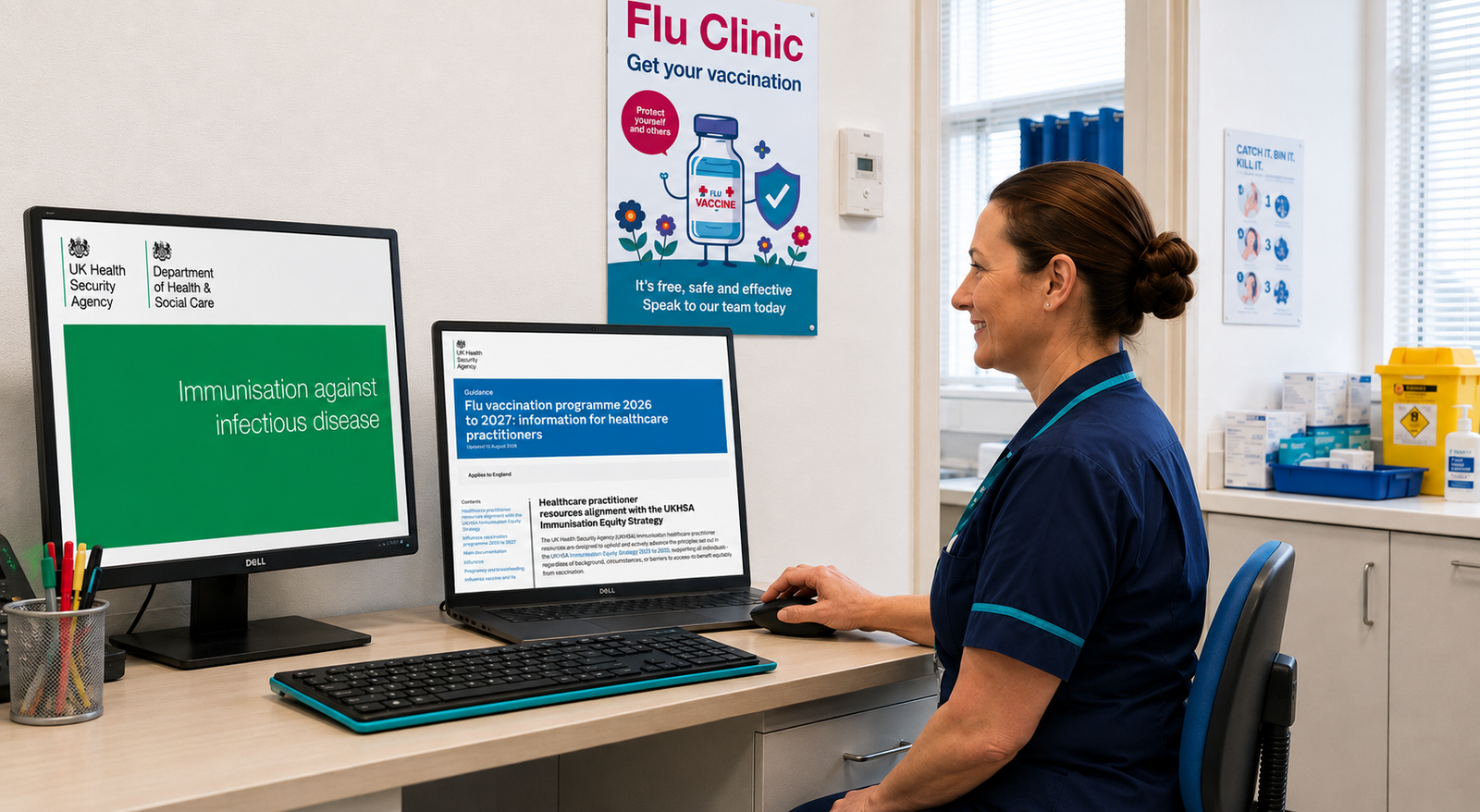
Start with yourself! Have you checked:
The UKHSA National Minimum Standards and Core Curriculum for Vaccination Training sets out the training expected for healthcare staff involved in vaccination.
Training shouldn’t simply be something we complete to obtain a certificate. It’s an opportunity to identify areas where our knowledge or practical skills may need refreshing.
Don’t assume this season is the same as last season. Check the current:
The latest 2026/27 National Flu Immunisation Programme letter and its June amendment should be on your reading list. Key developments this season include the expansion of community pharmacy provision for eligible children and the addition of people experiencing homelessness to the national flu vaccination programme.
There have also been important updates since the programme letter was published. UKHSA’s Flu vaccination programme 2026 to 2027: information for healthcare practitioners was updated in August 2026, including new advice on vaccine supply and prioritisation following manufacturing challenges affecting some inactivated influenza vaccines.
The Green Book influenza chapter was also updated on 27 August 2026, with revisions including age-specific vaccine advice, contraindications and precautions, and the latest position on egg allergy. JCVI now advises that egg allergy is no longer a contraindication to any influenza vaccine used in the UK, including LAIV. Practitioners should still ensure they are working within the requirements of the relevant PGD, VGD, PSD or other legal mechanism, alongside local governance arrangements.
With guidance continuing to evolve as the season begins, it is important not to rely on last year’s knowledge. Make sure you have completed an up-to-date seasonal flu update and take time to review both the latest Green Book chapter and UKHSA information for healthcare practitioners before your clinics begin.
To help you stay up to date with the latest changes, you can click on the box at the top of the web page titled ‘Get Emails about this page‘ to sign up to receive updates through your email address.
Before vaccinating, make sure you know the legal mechanism (PGD/VGD/PSD) under which you are working and that you are appropriately authorised before they can be used.
For 2026/27, the UKHSA has published a combined influenza PGD covering IIV and LAIV, alongside an influenza VGD. As guidance and national templates may be updated, always check that you are working from the current version and that you remain appropriately authorised to work under it.
Depending on your role and service, another legal mechanism, such as a Patient Specific Direction (PSD), may apply.
Knowing where to access the relevant document before your clinic begins can save valuable time if you need to check eligibility, contraindications, precautions or other requirements during a consultation.
Before the first patient arrives, check:
The Green Book’s Guidance on vaccine storage covers storage, stock management and disposal of expired or damaged vaccines.
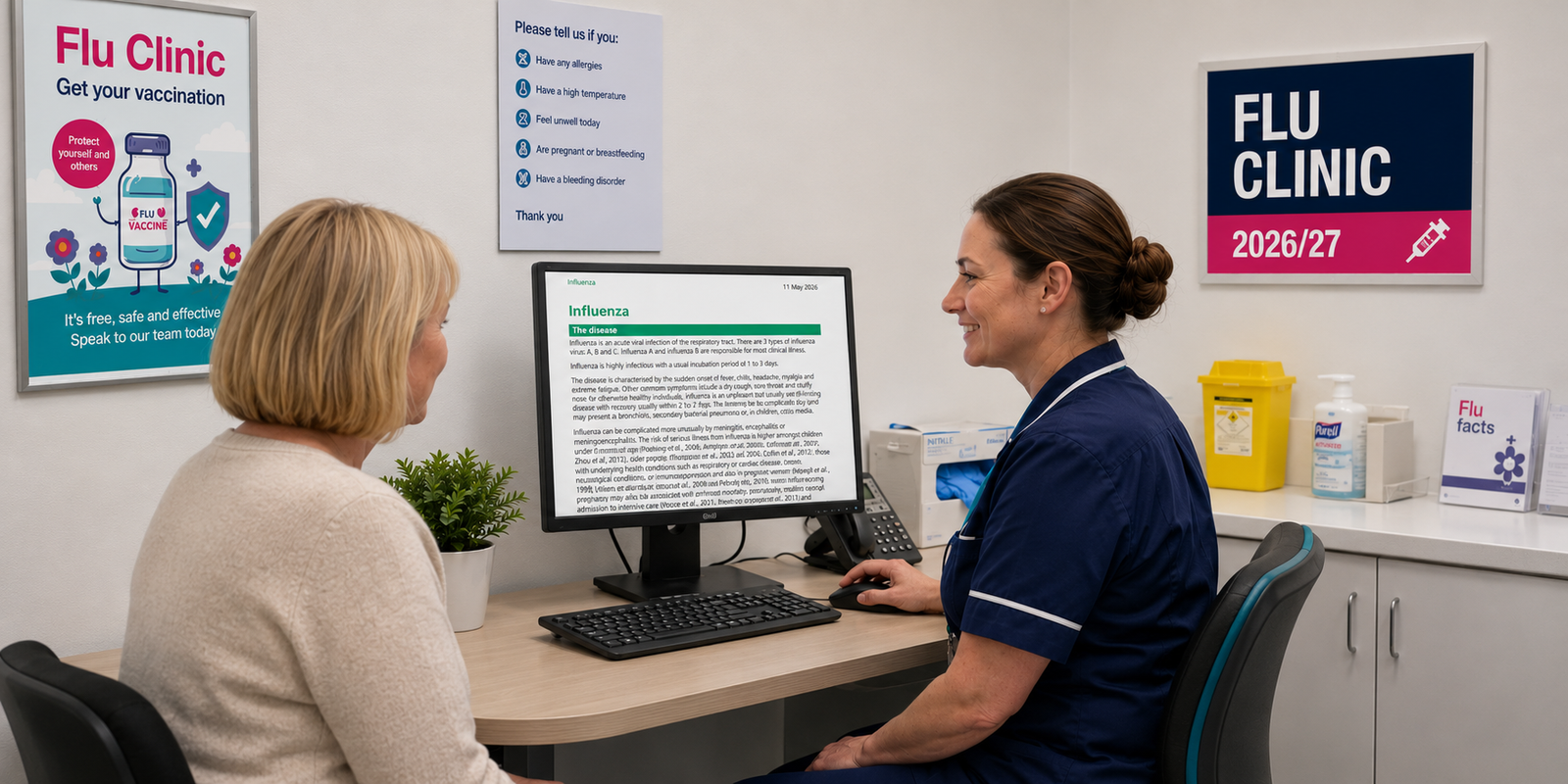
Even when the waiting room is busy, don’t allow speed (or panic) to replace safe practice.
Confirm the patient’s:
Check that the vaccine is appropriate for their age and circumstances, consider contraindications and precautions, and obtain informed consent.
If you’re unsure check the guidance rather than guess.
The Green Book, your authorised PGD/VGD/PSD, relevant Summary of Product Characteristics and local policies should be readily accessible during your clinic. The Green Book influenza chapter provides detailed clinical guidance for healthcare professionals administering flu vaccines.
“Can the vaccine give me flu?”
“Which vaccine am I having?”
“Why do I need another vaccine this year?”
We’ve explored these conversations in our previous Flu Hub article, but having trusted patient information readily available can make them easier.
Consider keeping patient information leaflets available and knowing where reliable online resources can be found.
It’s perfectly acceptable to look something up during a consultation. Patients can find it reassuring to see that the information you’re providing comes from current, trusted guidance rather than from memory alone.
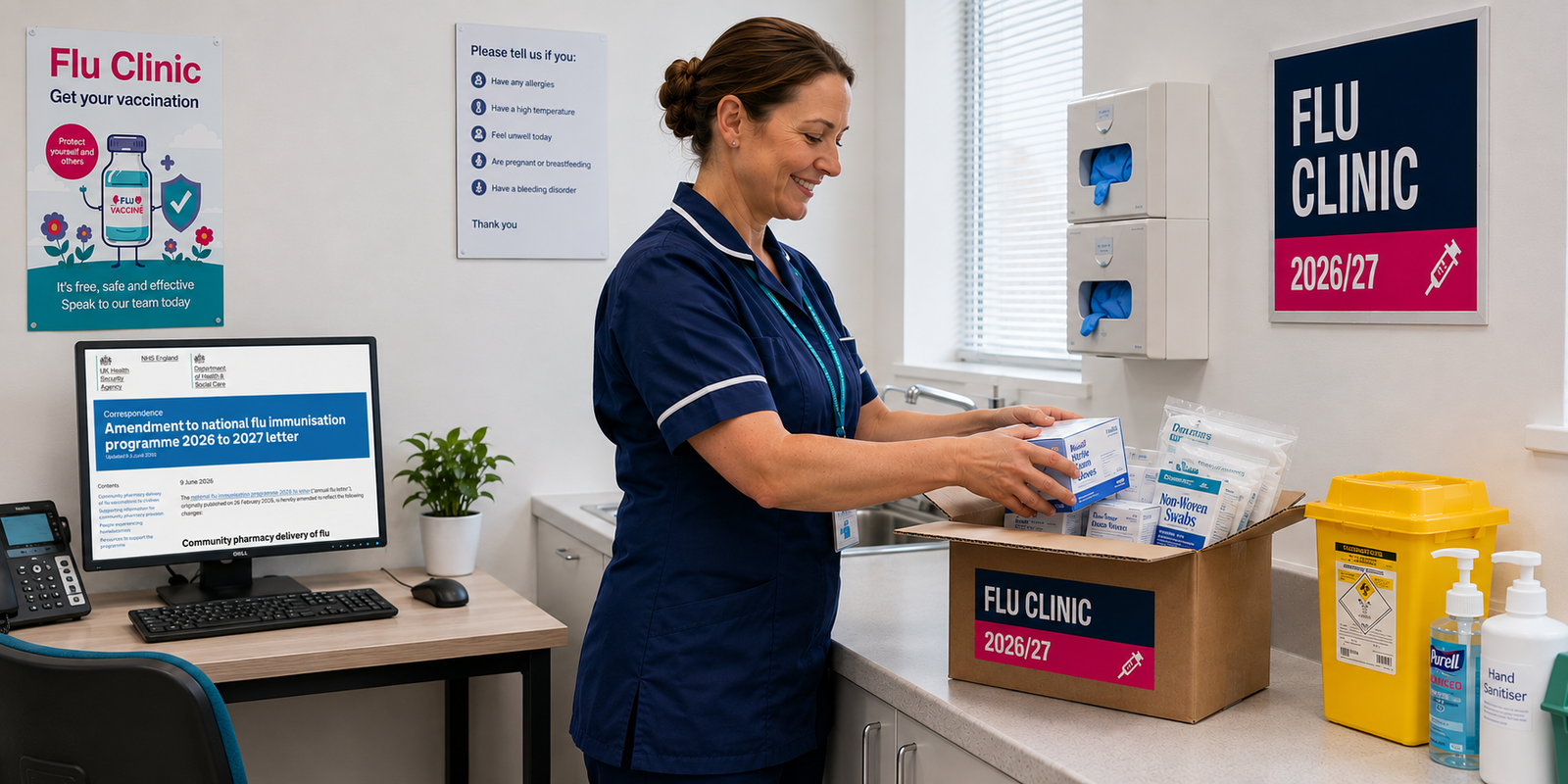
The clinic isn’t quite finished when the final patient leaves.
Make sure vaccinations have been documented accurately and transferred to the appropriate clinical or programme system according to local arrangements.
You should then take a few minutes to review:
A short post-clinic review can make the next session run even more smoothly.
From 1 September 2026, community pharmacies must now use the NHS Record a Vaccination Service (RAVS) to record all NHS vaccinations, including flu and COVID-19 vaccinations.
Pharmacy teams should ensure they have access to RAVS and are familiar with how to record vaccinations correctly before delivering the service. Further information, including guidance on accessing and using the service, is available through the NHS Record a Vaccination Service (RAVS).
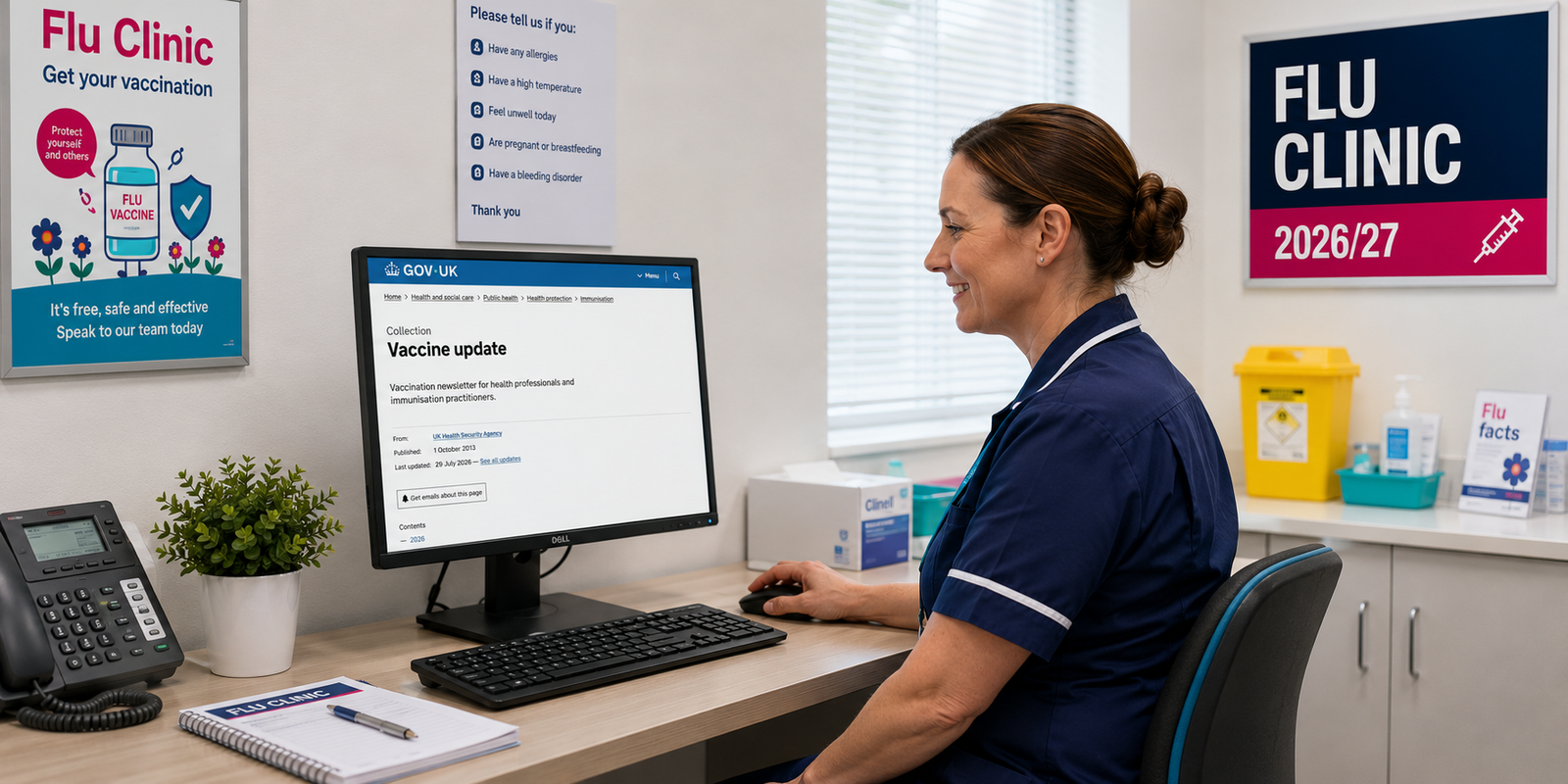
Keeping up to date isn’t about memorising every detail, it’s about knowing where to find the right information when you need it.
Bookmarking a small number of trusted resources can make a big difference during a busy vaccination season. UKHSA specifically identifies its national programme resources, training materials, competency tool and Vaccine Update newsletter as resources supporting the 2026/27 programme.
Useful starting points include:
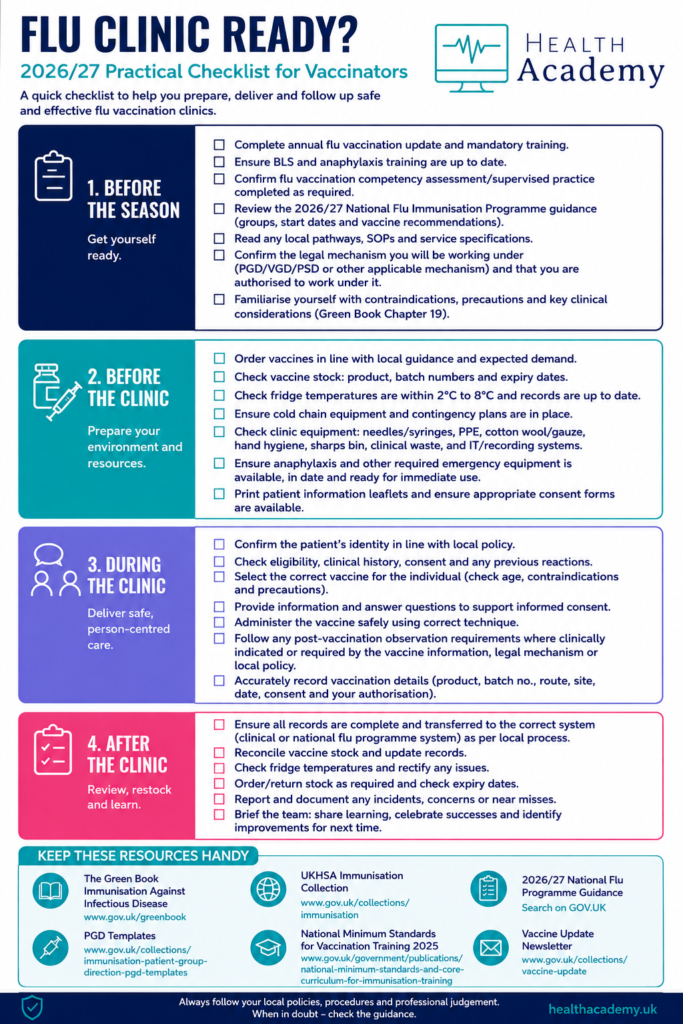
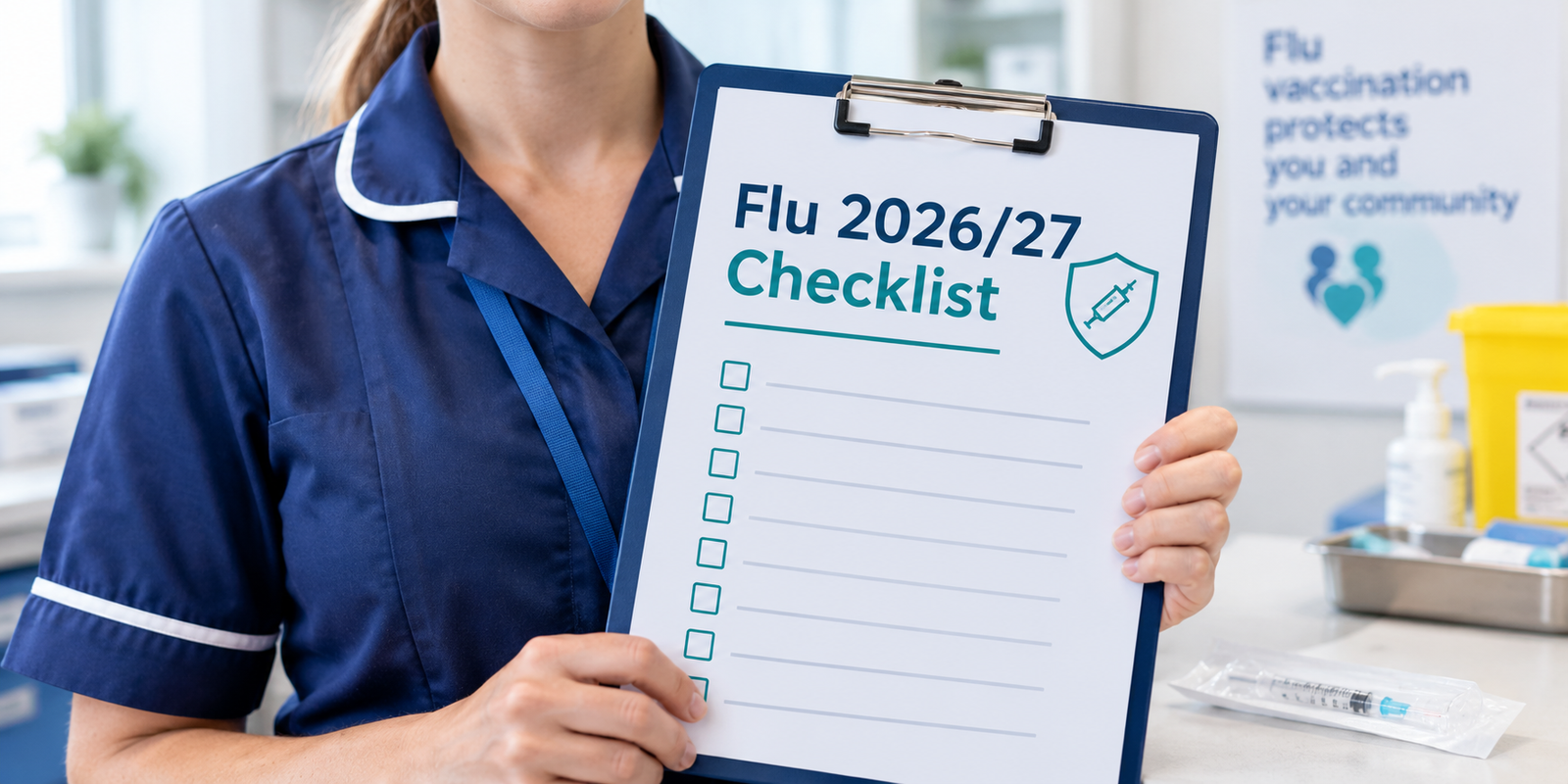
To help you put this guidance into practice, we’ve developed a Flu Clinic Ready? 2026/27 Practical Checklist for Vaccinators.
Designed to help your flu clinics run smoothly, the checklist provides a quick reminder of the key areas to consider before the season, before your clinic, during the clinic and after your final patient leaves.
Download the checklist, print a copy and keep it somewhere accessible during your flu clinics so you can quickly refer back to it when needed.
It covers areas including training and competency, current guidance, vaccine stock and cold-chain checks, equipment, patient eligibility and consent, documentation, incident reporting and post-clinic review.
Remember, the checklist is designed as a practical prompt and should be used alongside current national guidance, your local policies and procedures, and the legal mechanism applicable to your role.
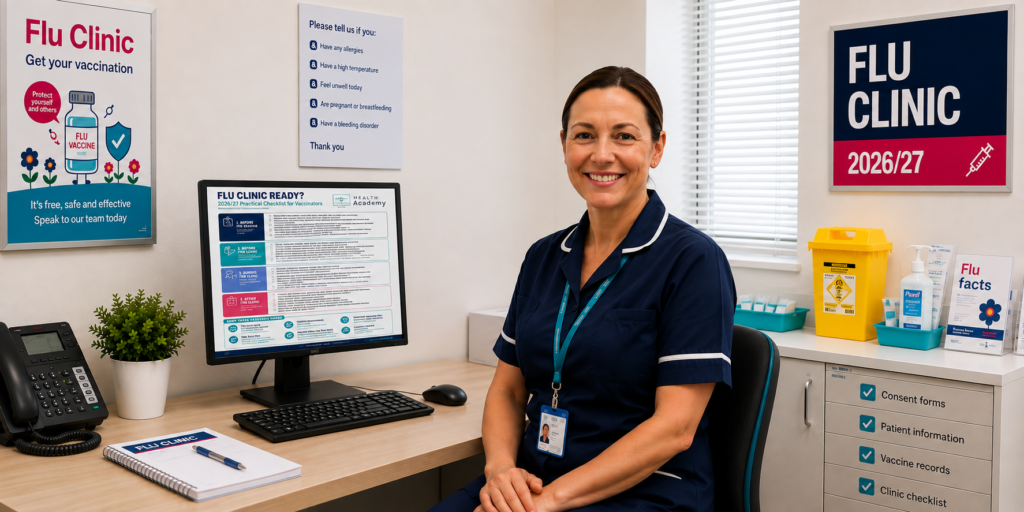
Preparing for flu season isn’t about memorising every piece of guidance.
It’s about making sure your training is current, your clinic is prepared, your resources are accessible and you know where to look when you’re unsure.
A few checks before your first patient walks through the door can help make your 2026/27 flu clinics safer, smoother and better prepared for a busy vaccination season.
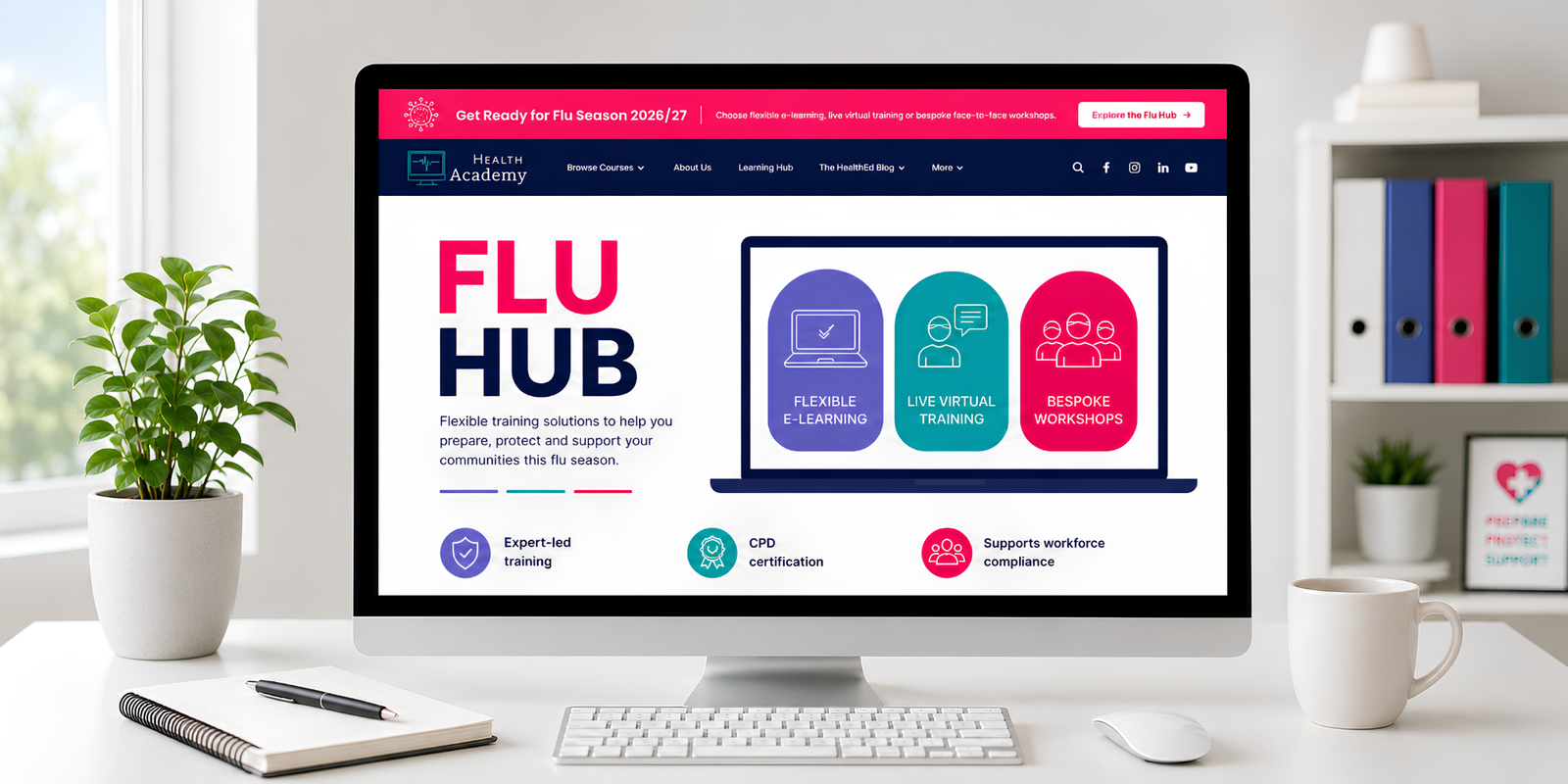
Preparing for flu season starts well before the first vaccination clinic opens.
To support healthcare professionals ahead of the 2026/27 programme, Health Academy’s Flu 2026/27 Training Hub Programme has been developed to help you understand the latest UK flu programme, the recommended vaccine products and safe vaccination practices.
Our Live Flu Update 2026/27 – Virtual Course provides an expert-led overview of the latest UK flu programme, vaccine products and national guidance in just 1.5 hours. You will also receive free online Flu and COVID-19 learning modules, so you can continue to learn at your own pace.
For organisations looking to refresh practical immunisation skills, our Flu 2026/27 Practical Workshop – Face-to-Face combines seasonal flu updates with practical injection technique, nasal flu vaccine administration, Basic Life Support and anaphylaxis management.
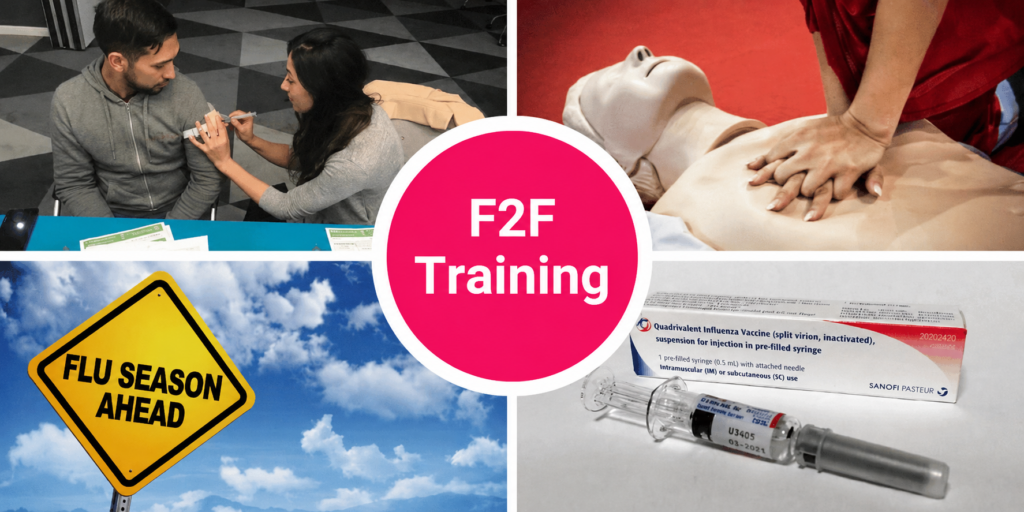
Alternatively, our Flu Training 2026/27 – E-learning course offers flexible online study covering the annual flu programme, vaccine products, patient communication, practical vaccination considerations and assessment through quizzes and case studies.
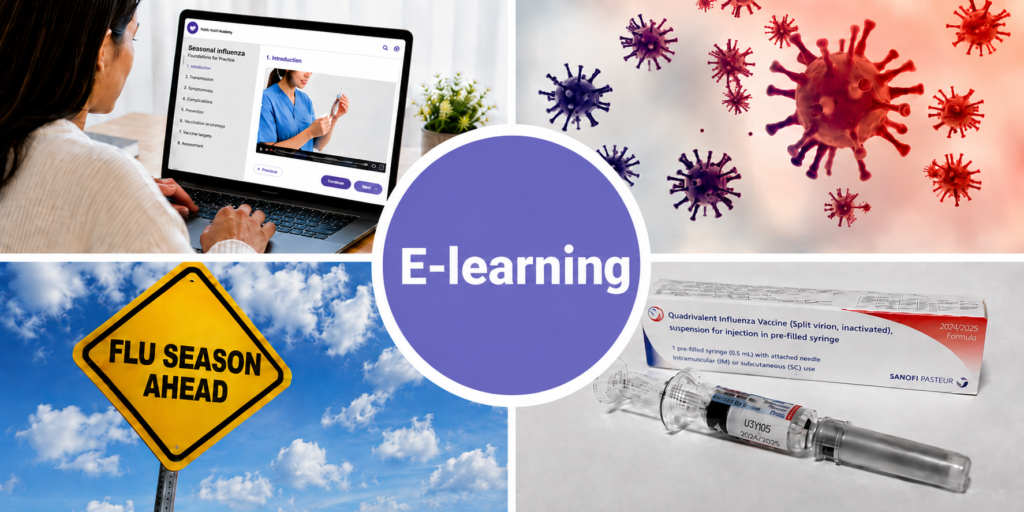
Whichever learning option you choose, our flu training is developed in line with current UKHSA and national immunisation guidance to help you approach the 2026/27 season with confidence.

This blog is the fourth in our Health Academy Flu Hub 2026/27 series, a collection of educational blogs designed to help healthcare professionals prepare for the 2026/27 influenza vaccination programme and stay informed throughout the season.