
Welcome to the second blog in the Health Academy Flu Hub 2026/27 series, created to help healthcare professionals prepare for the upcoming flu season.
Whether you are a practice nurse, community pharmacist, healthcare assistant, pharmacy technician or another healthcare professional involved in supporting or delivering seasonal influenza vaccination, our goal is simple: to provide clear, practical and evidence-based information that helps you feel informed, confident and ready for the 2026/27 programme.
This week, we look at why childhood flu vaccination remains so important, which children are eligible and what the further expansion of community pharmacy provision means for vaccinators in England.
When we think about influenza, we often focus on older adults and people living with long-term health conditions. However, children also play an important role in how influenza spreads through families and communities.
Children frequently mix closely with others at nurseries, schools, clubs and social activities. Even when their own symptoms are relatively mild, they can pass influenza to parents, grandparents, siblings and other people who may be at greater risk of serious illness.
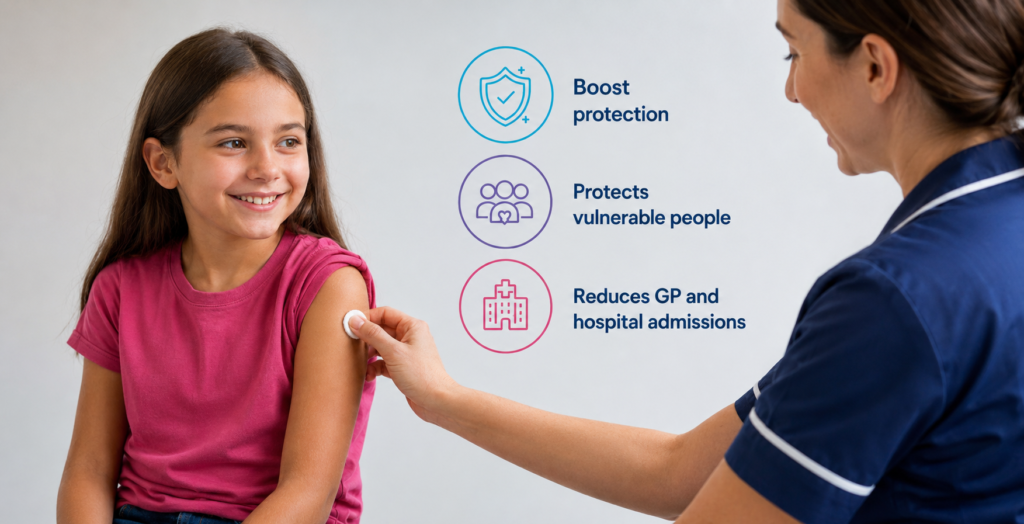
Vaccinating eligible children can help to:
Although many children recover from influenza without requiring medical treatment, the infection can sometimes lead to complications such as pneumonia, dehydration and the worsening of underlying conditions, including asthma and diabetes.
Childhood flu vaccination therefore provides direct protection to the child while also helping to reduce transmission within the wider population.
Healthcare professionals have an important role not only in administering vaccines safely, but also in helping parents and carers understand why vaccination is recommended and what they can expect.
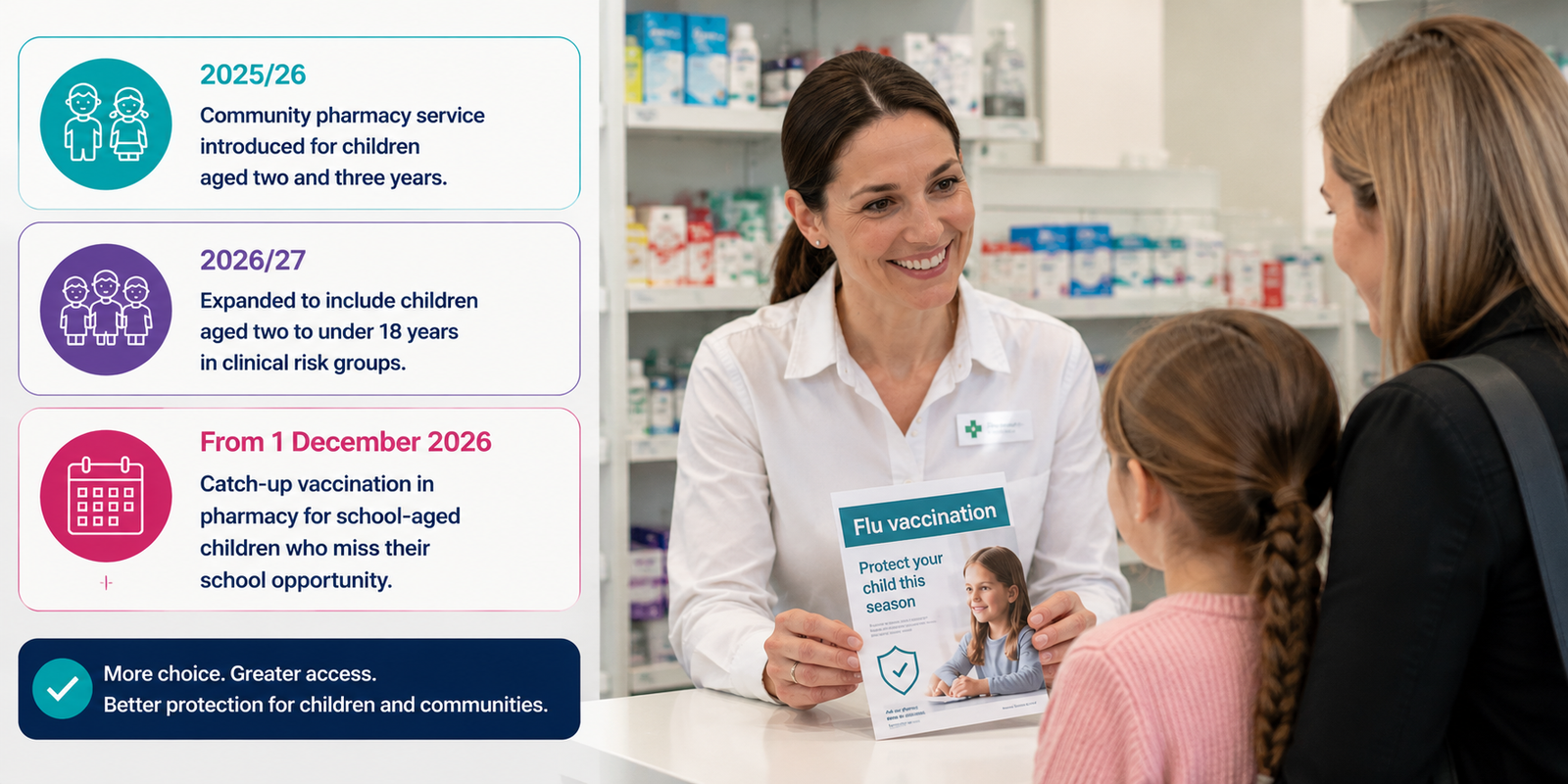
One of the key service developments for 2026/27 is the further expansion of childhood flu vaccination through participating community pharmacies in England.
This is not the first year that community pharmacies have been involved in the childhood programme. During the 2025/26 season, NHS England introduced a community pharmacy service for children aged two and three years.
For 2026/27, the pharmacy service is being expanded to cover additional groups of eligible children. This is intended to provide families with greater choice and additional opportunities to access vaccination, while complementing the existing offers through general practice and school-aged immunisation services.
The community pharmacy arrangements discussed in this article apply to England. Vaccinators working in Scotland, Wales or Northern Ireland should follow the programme arrangements and guidance applicable in their nation.

The date on which a child can receive their vaccination through community pharmacy depends on their age, clinical circumstances and the usual route through which they are offered vaccination.
Children aged two and three years can be vaccinated:
The pharmacy service supplements the established general practice offer and gives families another opportunity to access vaccination.
Eligible children aged two years to under 18 years who are in a clinical risk group can be vaccinated:
The community pharmacy service provides an additional route for eligible children in this group.
Children aged six months to under two years who are in a clinical risk group are not included in the community pharmacy service. They should receive an appropriate inactivated influenza vaccine through another commissioned provider, such as their general practice.
From 1 December 2026, participating community pharmacies can offer vaccination to eligible primary and secondary school-aged children who are not in a clinical risk group and who missed their school vaccination opportunity.
The school-aged immunisation service remains the principal route for this group. Community pharmacy provides an additional catch-up option rather than replacing the routine school offer.
Vaccinators must check the current national guidance, applicable service specification and local arrangements before offering vaccination.
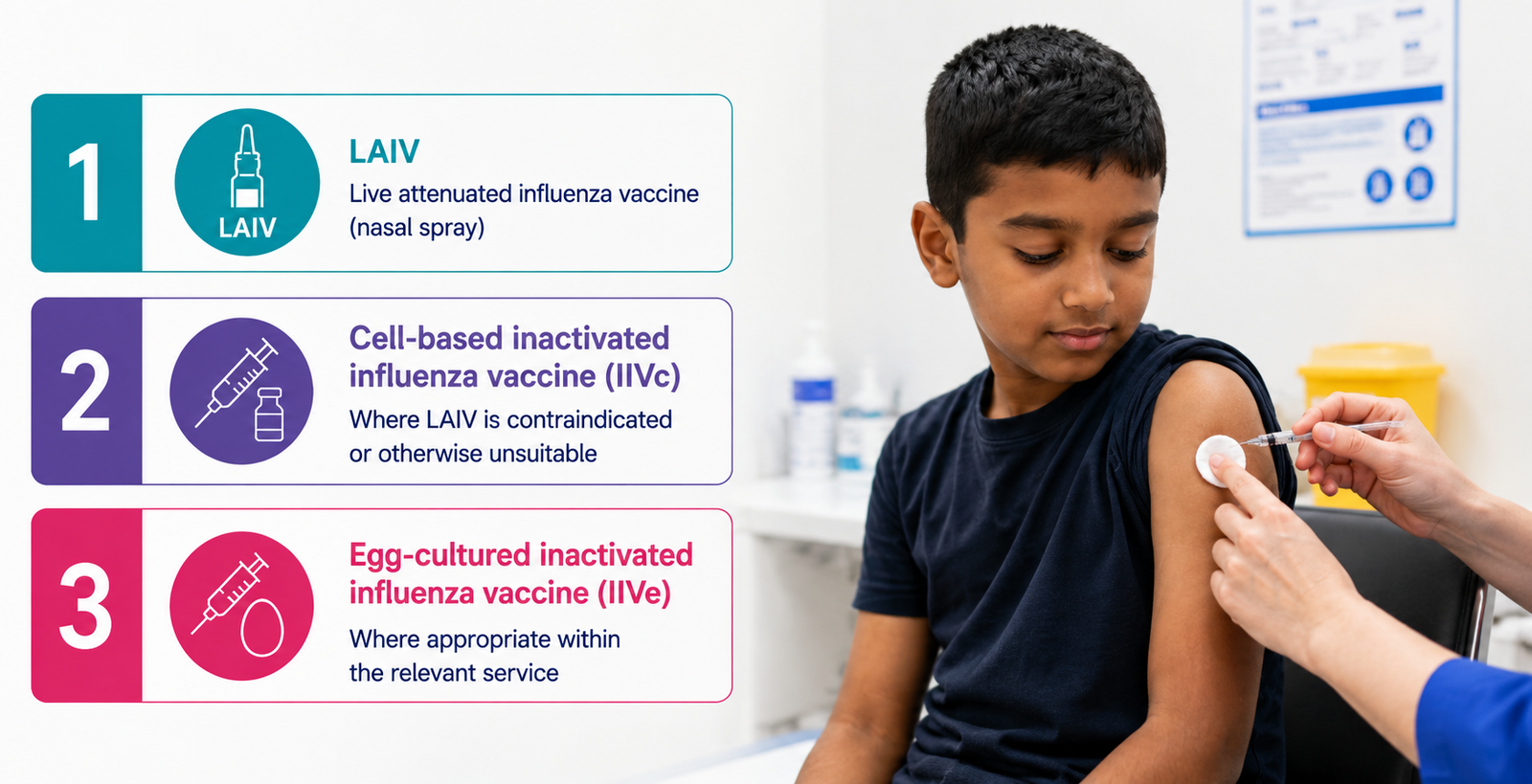
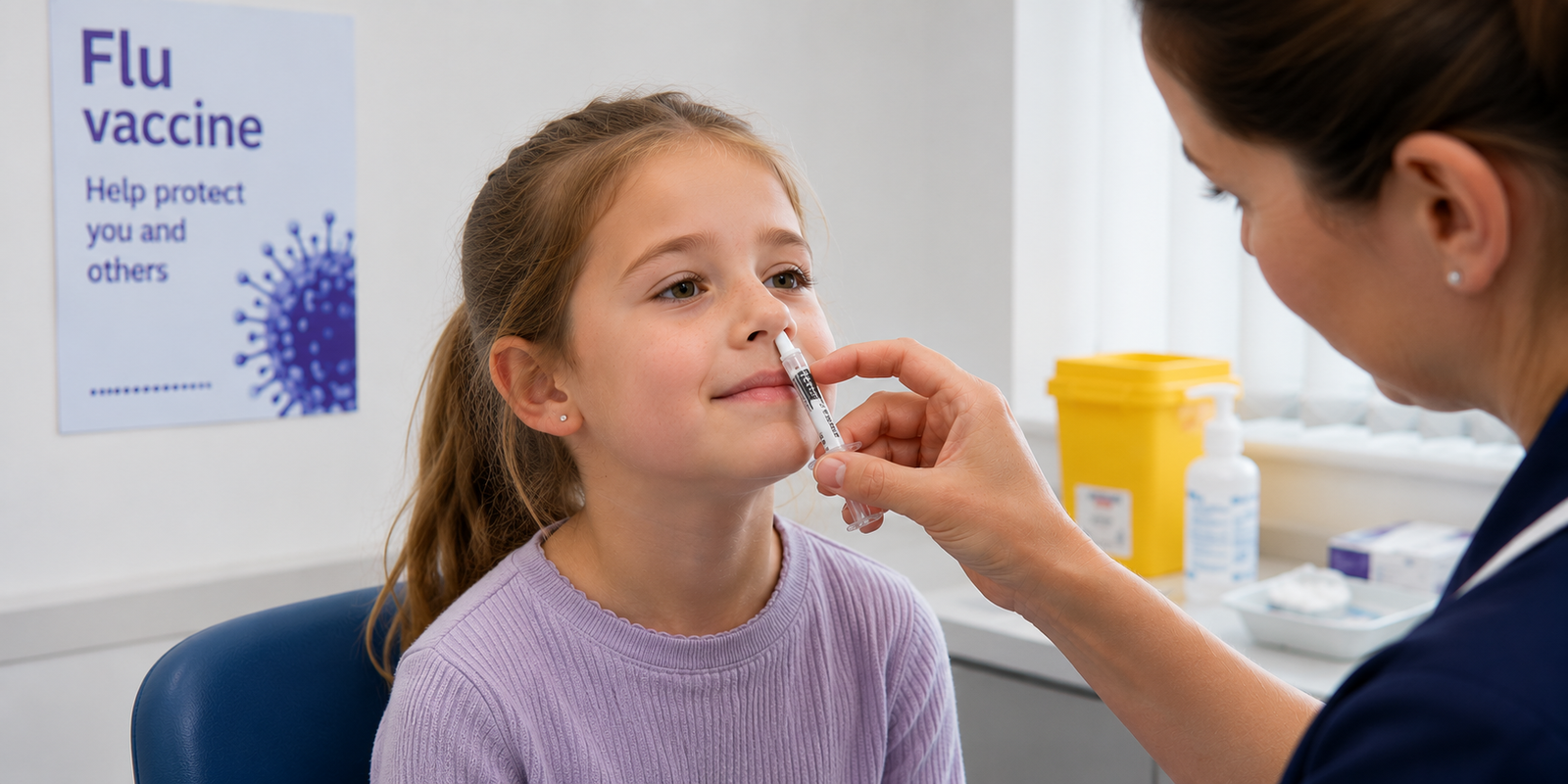
For most eligible children aged two years and over, the Live Attenuated Influenza Vaccine (LAIV) remains the first-line vaccine.
However, LAIV is not suitable for every child.
For children aged two to under 18 years, the recommended order of preference for 2026/27 is:
An inactivated vaccine may be required where LAIV is contraindicated or otherwise unsuitable, for example in a child who is clinically severely immunocompromised or who is a close or household contact of someone who is very severely immunocompromised.
Children vaccinated through the community pharmacy childhood flu service must not be offered IIVe. Where LAIV is unsuitable, pharmacy vaccinators must follow the service specification and use the recommended alternative vaccine or direct the child to another appropriate provider.
For children aged six months to under two years in a clinical risk group, LAIV is not licensed. The recommended vaccine is IIVc, with IIVe as the second preference where appropriate. These children cannot be vaccinated through the community pharmacy childhood service.
Delivering childhood vaccinations may involve different clinical and operational considerations from providing an adult flu vaccination service. Before clinics begin, participating pharmacy teams should ensure that they:

If you work in community pharmacy, there is another important change to be aware of. From 1 September 2026, community pharmacies must use the NHS Record a Vaccination Service (RAVS) to record NHS vaccinations, including flu and COVID-19 vaccinations.
RAVS is an NHS-owned service that allows vaccination details to be recorded and shared with the patient’s GP record, while also supporting NHS Business Services Authority (NHSBSA) payment processes.
If your pharmacy is not already using RAVS, you can find information about signing up, recording vaccinations and accessing training through the NHS Record a Vaccination service and user guide.
Pharmacy owners must also ensure that appropriate clinical governance arrangements, standard operating procedures and escalation processes are in place.

Preparing for flu season involves much more than ordering vaccines. Taking a little time to refresh your knowledge before clinics begin can make a significant difference to both patient experience and professional confidence.
Every flu season brings updates. Before your first clinic, review the latest guidance from UKHSA and NHS England so you are confident about eligible groups, programme changes and recommended vaccine products.
Do not rely solely on arrangements from the previous season, particularly where the range of children who can be vaccinated through your service has changed.
Make sure you understand the recommended order of vaccine preference, the contraindications and precautions associated with LAIV and when an inactivated vaccine may be needed.
Vaccinators should also know what action to take if the recommended vaccine is unavailable or cannot be administered through their service.
Parents naturally want to make informed decisions about their child’s healthcare. Questions about flu vaccine safety, its effectiveness and the nasal flu vaccine are common. Listening carefully, acknowledging concerns and providing clear evidence-based information can help you build trust and support informed decision-making.
Whether you have administered hundreds of vaccines or are preparing for your first flu clinic, practical skills remain just as important as clinical knowledge. Reviewing the correct administration technique for both LAIV and injectable influenza vaccines, maintaining the cold chain, recognising contraindications and precautions, and understanding the management of anaphylaxis all contribute to safe vaccination practice.
The UKHSA National Minimum Standards and Core Curriculum for Vaccination Training emphasise that immunisers should maintain competence through ongoing education and receive additional training when significant changes are introduced to vaccination programmes. Vaccinators should undertake annual training updates to ensure their knowledge and practice remain current. They must also be competent to administer the relevant childhood flu vaccines and authorised to work under the applicable legal mechanism.
Flu vaccination may be a familiar part of clinical practice, but the programme does not remain the same from year to year.
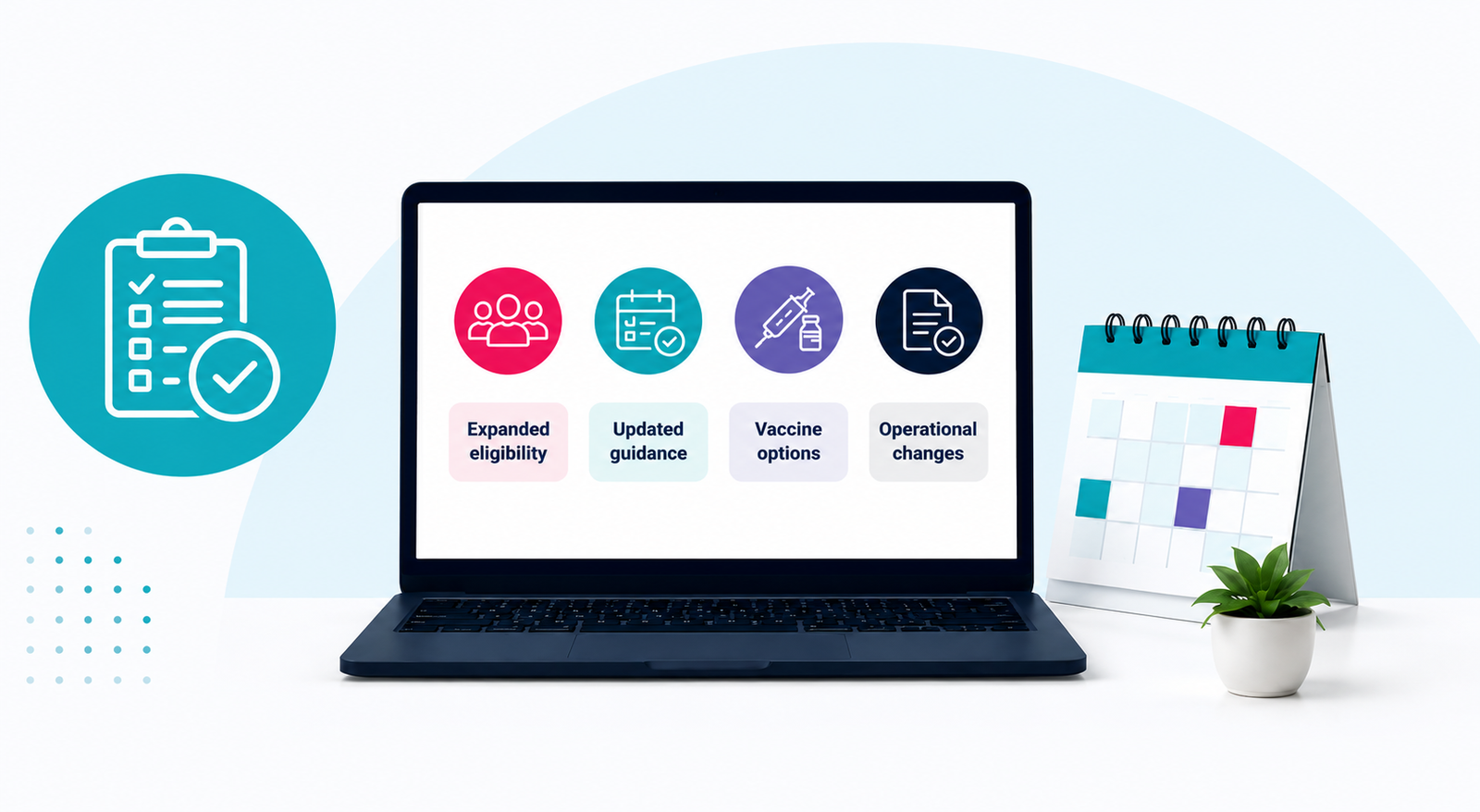
Annual updates may include changes to:
The expansion of the community pharmacy childhood service for 2026/27 is a clear example of why vaccinators need to review current guidance before clinics begin.
For experienced vaccinators, refresher training reinforces existing knowledge while highlighting important changes that may affect practice. For those new to immunisation or taking on additional responsibilities, annual education provides an opportunity to develop confidence before delivering vaccinations independently.
Ultimately, staying up to date is about more than meeting professional requirements, it helps you ensure every patient receives safe, effective and evidence-based care.
Preparing for flu season starts well before the first vaccination clinic opens.
To support healthcare professionals ahead of the 2026/27 programme, Health Academy’s Flu 2026/27 Training Hub Programme has been developed to help you understand the latest UK flu programme, the recommended vaccine products and safe vaccination practices.
Our Live Flu Update 2026/27 – Virtual Course provides an expert-led overview of the latest UK flu programme, vaccine products and national guidance in just 1.5 hours. You will also receive free online Flu and COVID-19 learning modules, so you can continue to learn at your own pace.

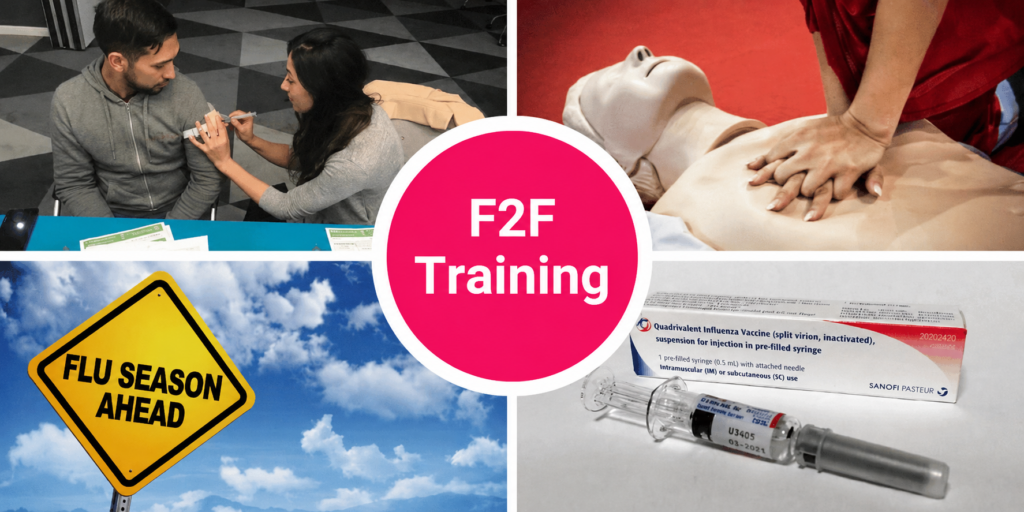
For organisations looking to refresh practical immunisation skills, our Flu 2026/27 Practical Workshop – Face-to-Face combines seasonal flu updates with practical injection technique, nasal flu vaccine administration, Basic Life Support and anaphylaxis management.
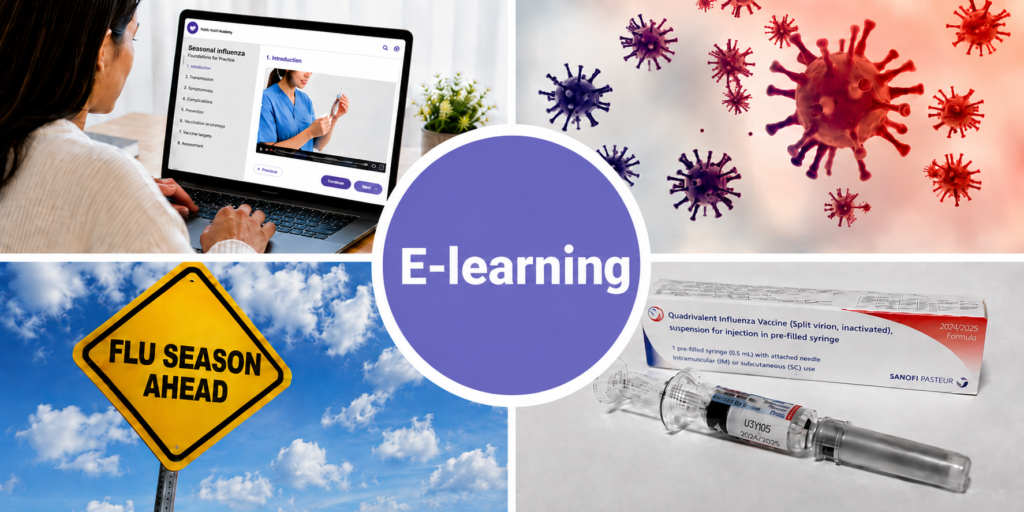
Alternatively, our Flu Training 2026/27 – E-learning course offers flexible online study covering the annual flu programme, vaccine products, patient communication, practical vaccination considerations and assessment through quizzes and case studies.
Whichever learning option you choose, our flu training is developed in line with current UKHSA and national immunisation guidance to help you approach the 2026/27 season with confidence.
This blog is the second in our Health Academy Flu Hub 2026/27 Series, a collection of fortnightly educational blogs, leading up to the start of the 2026/27 Flu vaccination season. It aims to support healthcare professionals like yourself, to prepare, feel informed and become confident, getting you ready for the 2026/27 vaccination programme.
Next time, we’ll take a look at how confident you are heading into the 2026/27 flu season. The third blog “How Confident Are You Answering Questions About Flu Vaccination?“ lets us look at some of the most common questions vaccinators are asked and share practical, evidence-based answers to help you communicate with confidence.
This also ties in with our FREE Flu lunchtime session on the 12th August 2026, Flu Myths and Misconceptions, which you can join to help you get ready for the 2026/27 flu season.