


Flu vaccination appointments are often about much more than simply administering a vaccine. For many vaccinators, one of the most important parts of the consultation is answering questions, addressing concerns and helping patients make an informed decision about vaccination.
Whether you are a practice nurse, community pharmacist, healthcare assistant, pharmacy technician or another healthcare professional involved in seasonal influenza vaccination, keeping your knowledge up to date and knowing where to find reliable information can help you approach these conversations with confidence.
Let’s take a look at some of the common questions vaccinators may face, and how being prepared can make those conversations easier.

Patients are increasingly exposed to health information, from social media and news reports to conversations with friends and family. While some of this information can be accurate, other information may be misleading, incomplete or taken out of context.
Being able to respond with clear, evidence-based information helps:
If you’ve worked in a flu clinic before, you’ll know that no two consultations are the same. While many appointments are straightforward, others involve questions that require reassurance, clear explanations and an understanding of the current evidence and guidance.
You may recognise some of the questions your patients may ask, such as:
Whether you’re new to flu immunisation or have years of experience, regularly refreshing your knowledge can help you answer these questions clearly and know when you need to check the latest guidance.
Some of the questions patients ask may be based on common myths or misunderstandings about flu vaccination. Being familiar with these can help you recognise where a patient may need further explanation or clarification.
The infographic below highlights some common flu vaccine myths alongside the facts.
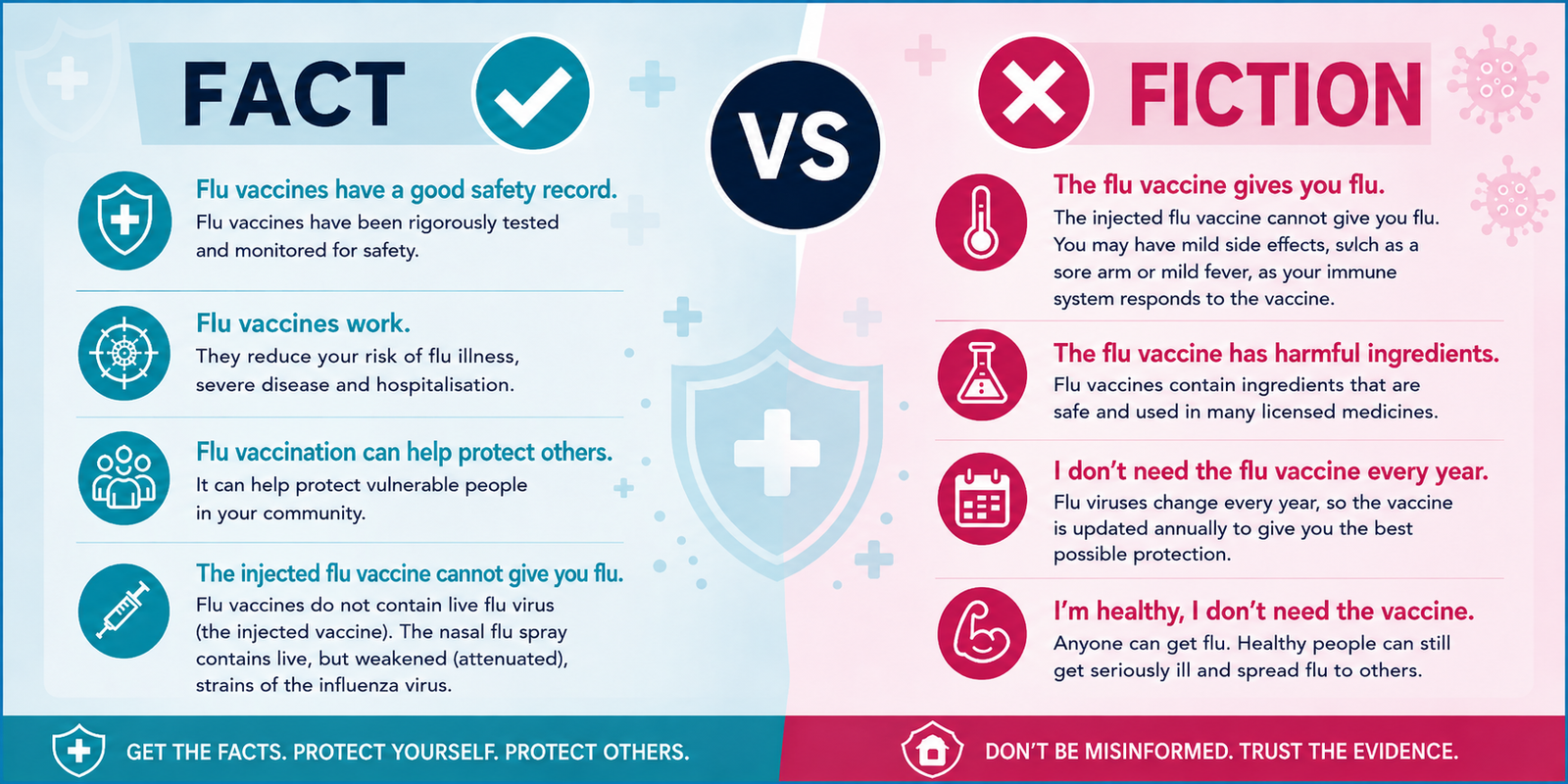
Remember, a patient raising a misconception does not necessarily mean they are opposed to vaccination. They may simply be looking for clear information or reassurance before making their decision.
You can also watch our free Flu Vaccine Myths and Misconceptions Lunchtime Health News session that was recorded on the 12th August 2026 for a closer look at some of the questions and concerns vaccinators may encounter. Catch up on the recording below.

One of the biggest misconceptions among new vaccinators is that confidence comes from knowing everything.
In reality, confidence comes from:
Patients often appreciate an honest conversation supported by reliable evidence more than a quick answer.
Vaccination appointments are about more than administering a vaccine. They can provide an opportunity to:
Research shows that healthcare professionals are among the most trusted sources of vaccine information. A confident, empathetic conversation can help patients understand the evidence, address their concerns and make an informed decision about vaccination.
Being able to answer patient questions confidently is an important part of every vaccination consultation. Confidence doesn’t mean memorising every answer, it means knowing where to find trusted information and communicating it clearly.

One of the most valuable skills any vaccinator can develop is knowing where to find the latest national and local guidance.
Rather than relying on memory alone, experienced and confident vaccinators regularly refer to nationally approved resources during the flu season.
These include:
Reviewing guidance before your flu clinic begins, will allow you to approach the flu season with confidence and will help you reduce uncertainty and anxiety once vaccination appointments are underway.
Don’t feel that you need to know every answer from memory. It’s also good clinical practice to refer to the latest guidance during consultations whenever you’re unsure or when recommendations have changed.
The flu programme can change from year to year, and further updates may also be issued during the season. Make sure you are always working from the most current national guidance, legal mechanisms and local policies relevant to your practice.
Even experienced immunisers benefit from taking time to refresh their knowledge before or during their flu clinic(s).

If patients would like to read more about the flu vaccine, it is good practice for you to know where they can find reliable resources such as:
Using trusted resources can help patients understand the information available, reduce the impact of misinformation and make an informed decision about vaccination.
Some patients may prefer to take home a flu information leaflet so they can read it in their own time, discuss it with family or carers if appropriate, and make an informed decision.

Whether you are new to flu vaccination or an experienced vaccinator, preparation should include completing the training appropriate to your role, reviewing current national and local guidance and making sure you remain competent in the areas of practice for which you are responsible.
Health Academy offers a range of training options for the 2026/27 flu season, including e-learning, live virtual updates and bespoke face-to-face practical training.
You can explore the different options and find further resources in our Health Academy Flu Hub 2026/27.


This blog is the third in our Health Academy Flu Hub 2026/27 Series, a collection of fortnightly educational blogs, leading up to the start of the 2026/27 Flu vaccination season.
Our aim is to support healthcare professionals to prepare, stay informed and feel confident for the season ahead.
Next time, our fourth blog, Preparing You for Flu Season 2026/27: A Practical Checklist for Vaccinators, takes you through a practical pre-clinic checklist, covering areas such as the type of training you can attend, essential guidance, equipment, documentation and patient resources to help you prepare with confidence for the 2026/27 flu season.
See you next time!